Cat Peeing Outside the Litter Box? How to Stop It
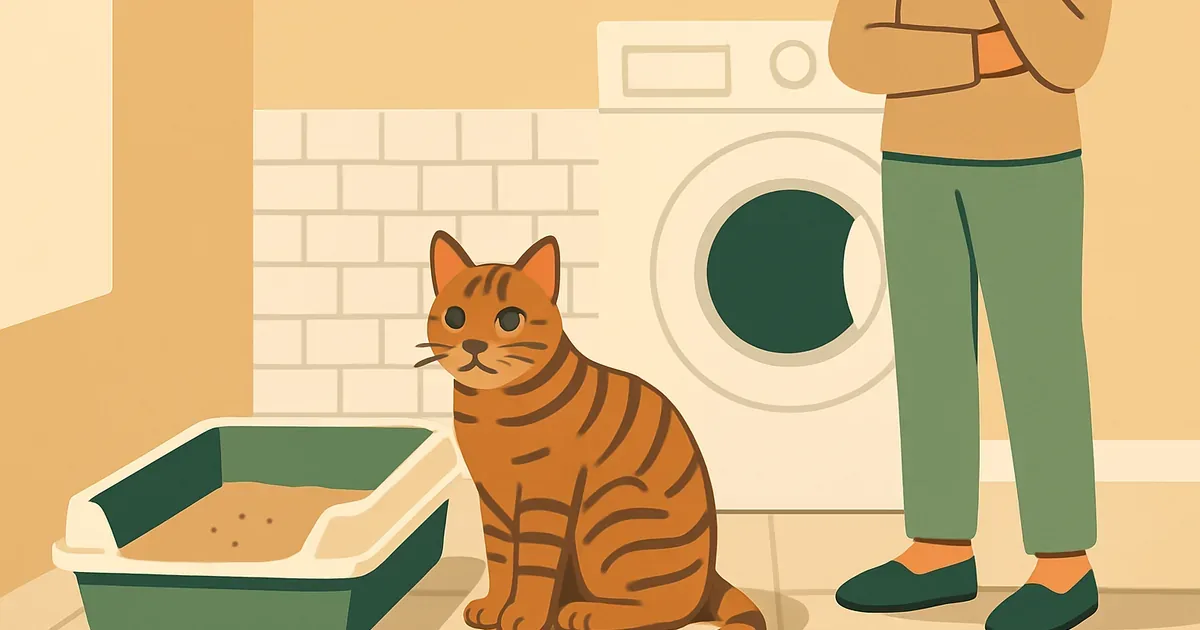
Table of Contents
Cats pee outside the box for three reasons: a medical problem, a litter box issue, or stress and territorial behavior. The fix starts with a vet visit to rule out UTIs and kidney problems. Then you address the litter box setup. And you clean every accident spot with an enzyme cleaner, because cats return to areas that smell like urine. That re-marking cycle is what turns a single accident into a chronic problem.
This guide covers the three root causes, how to identify which one applies to your cat, the litter box fixes that actually work, and why enzyme cleaning is critical to stopping the cycle.
Rule out medical causes first
This is step one, and it’s not optional. A cat that suddenly starts peeing outside the box is often in pain or dealing with a health issue. No amount of litter box optimization will fix a urinary tract infection.
Common medical causes:
- Urinary tract infections (UTIs). The most common medical cause. Signs include frequent small amounts of urine, straining, and crying while urinating.
- Kidney disease. Increases urine volume, so your cat may not make it to the box in time.
- Diabetes. Also increases urine output significantly.
- Hyperthyroidism. Common in older cats, causes increased urination.
- Arthritis. Makes climbing into the litter box painful, especially for senior cats. Your cat may want to use the box but physically can’t get in.
- Bladder stones and feline interstitial cystitis. Both cause pain during urination and can lead to box avoidance.
⚠️ See a Vet for These Signs
Blood in the urine, straining to urinate, crying or vocalizing while urinating, or frequent trips to the box with little output are all signs that need immediate veterinary attention. Male cats that strain to urinate may have a urinary blockage, which is a life-threatening emergency.
Schedule a vet visit before trying any behavioral fixes. If the vet finds a medical cause, treating it often resolves the litter box problem on its own. The ASPCA’s litter box guide is another good resource for distinguishing medical from behavioral causes.
Litter box problems (the most common cause)
Once your vet rules out medical issues, the litter box setup is the next place to look. This is the most common cause of litter box avoidance, and the fixes are usually straightforward.
Location
Cats need to feel safe when they use the box. Boxes in high-traffic areas, next to noisy appliances, or in dead-end spots where the cat feels trapped will get avoided.
Good placement guidelines:
- Quiet, low-traffic areas with easy access
- Multiple escape routes so the cat doesn’t feel cornered
- Away from food and water bowls. Cats don’t eat where they eliminate.
- Each floor of a multi-story home should have at least one box
Number of boxes
The standard rule: one box per cat, plus one extra. Two cats need three boxes. Three cats need four.
Place them in different locations, not lined up side by side. To a cat, three boxes next to each other is one big box, not three separate options. Spreading them out gives your cat choices and reduces conflict in multi-cat homes.
Cleanliness
Cats have about 200 million scent receptors compared to about 5 million in humans. A box that smells fine to you may be overwhelming to your cat.
Cleaning guidelines:
- Scoop at least once daily. Twice is better.
- Full litter change and box wash every 1-2 weeks
- Wash the box with mild soap and water. Avoid strong-smelling cleaning products that leave residue.
Litter type and depth
Most cats prefer unscented, clumping litter at a depth of 2-3 inches. Scented litters are designed to appeal to humans, not cats. Many cats actively avoid strongly scented products.
If you need to switch litter brands, do it gradually. Mix the new litter with the old over a week or two. A sudden change in litter texture or scent can trigger box avoidance.
Box type and size
The box should be at least 1.5 times the length of your cat. Many commercial litter boxes are too small, especially for larger breeds.
Other considerations:
- Covered vs. uncovered. Many cats dislike covered boxes because they trap odors inside. If your cat avoids a covered box, try removing the lid.
- Entry height. High sides help contain litter scatter and spraying. But for older cats with arthritis, a low-entry box or a box with a cut-out entrance is easier to access.
💡 The Litter Box Test
If you’re not sure what your cat prefers, set up two boxes side by side with different options: covered vs. uncovered, scented vs. unscented litter, different litter depths. See which one your cat uses more. Cats vote with their paws.
Litter Box Troubleshooting Checklist
Stress and territorial marking
Stress is the third major cause. Cats are creatures of habit, and changes to their environment or routine can trigger marking behavior or inappropriate urination.
Common stress triggers:
- New pets in the household
- New family members (baby, partner, roommate)
- Schedule changes (new work hours, travel)
- Home renovations or rearranging furniture
- Conflict with other cats in the home
It helps to know the difference between marking and inappropriate urination. Marking is usually small amounts of urine sprayed on vertical surfaces (walls, furniture legs, door frames). Inappropriate urination is a full-volume void on horizontal surfaces (carpet, beds, laundry).
For multi-cat homes, give each cat their own resources:
- Separate food and water bowls
- Separate resting spots and perches
- Enough litter boxes (one per cat plus one)
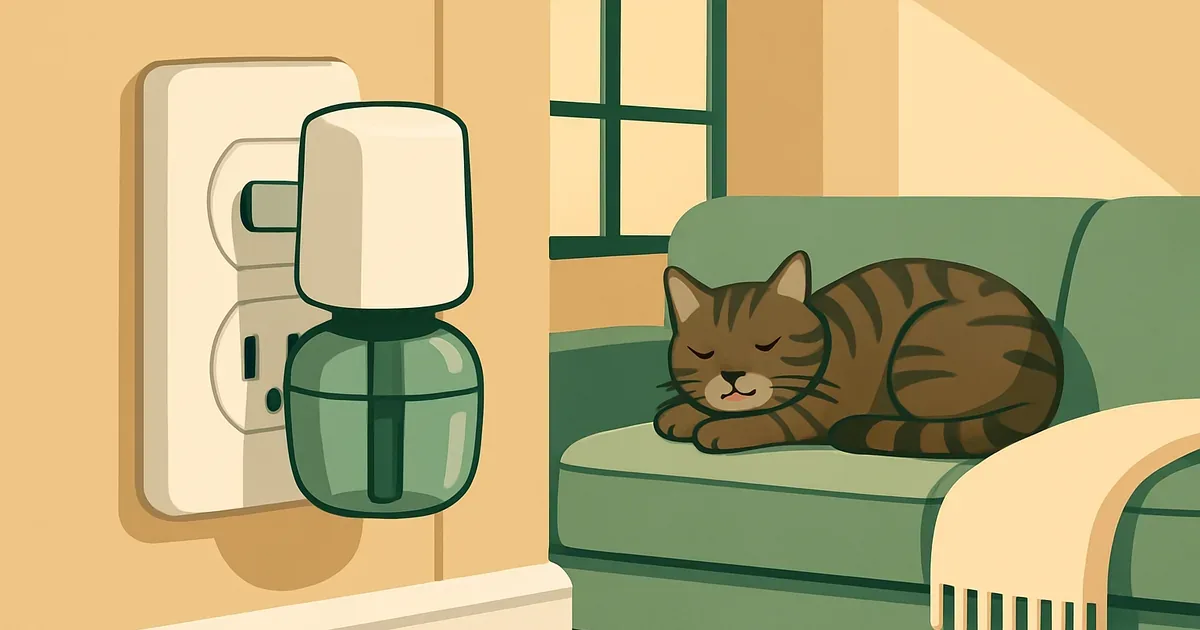
Feliway pheromone diffusers can help reduce stress-related marking. These plug-in devices release a synthetic version of the feline facial pheromone that signals safety. They’re not a cure-all, but they can lower the overall stress level in your home while you address the root cause.
Cat Marking vs Inappropriate Urination
| Characteristic | Marking/Spraying | Inappropriate Urination |
|---|---|---|
| Volume | Small amount | Full bladder void |
| Surface | Vertical (walls, furniture legs) | Horizontal (carpet, beds) |
| Posture | Standing, tail quivering | Squatting |
| Common cause | Territorial/stress | Medical or litter box issue |
| Location pattern | Edges, door frames, new objects | Soft surfaces, specific rooms |
Why enzyme cleaning breaks the cycle
This is the connection most pet behavior articles miss. You can fix every litter box issue and reduce every stressor, but if your cat can still smell old urine in the carpet, they’ll go back to that spot.
Here’s the science:
- Cat urine contains uric acid crystals that regular cleaners can’t fully break down
- Vinegar and soap mask the smell for humans but cats can still detect the uric acid
- Cats re-mark spots that smell like urine, creating a repeat cycle
- Enzyme cleaners with uricase digest uric acid at the molecular level, eliminating the scent signal that tells your cat “this is a bathroom spot”
Every accident spot needs thorough enzyme cleaning. That includes old spots you’ve already “cleaned” with regular products. If you cleaned a stain with vinegar or soap months ago, the uric acid crystals are still there. Your cat knows it even if you don’t.
For a deeper understanding of how these products work, read our guide on how enzyme cleaners work. You can also learn about the specific types of enzymes in cleaners and why uricase is the one that matters for cat urine.
How to clean accident spots properly
The cleanup technique matters as much as the product you use. Here are the surface-specific approaches.
Carpet and rugs
Carpet is the most common target and the hardest surface to clean because urine soaks through the fibers into the pad underneath.
- Blot fresh urine with clean white cloths. Don’t rub.
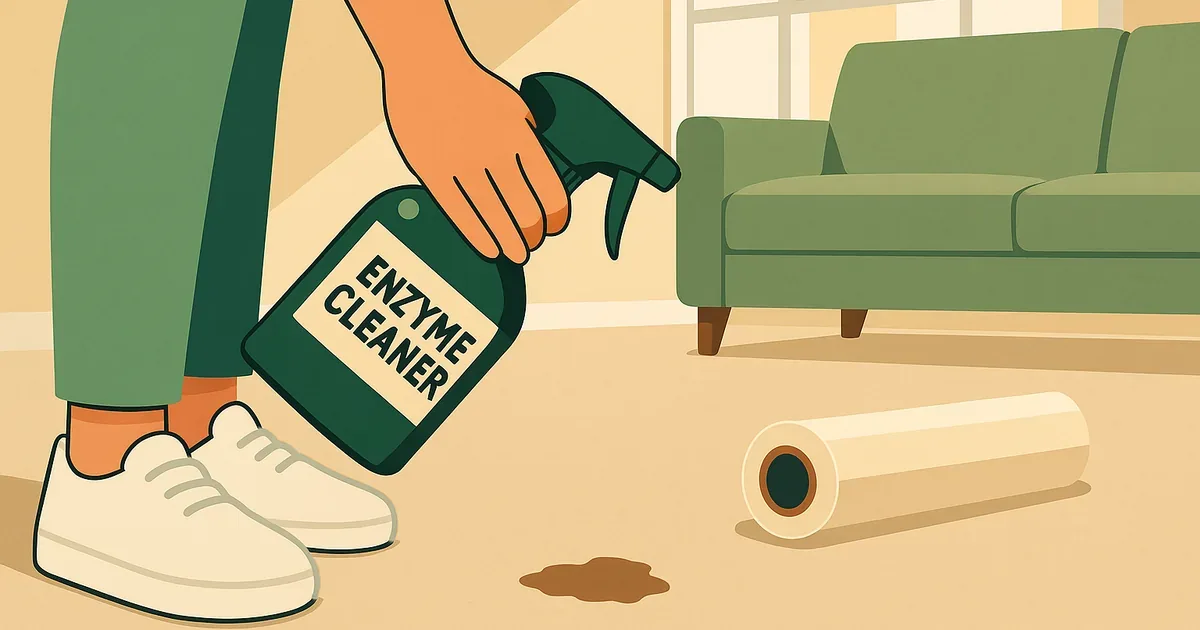
- Saturate the area with enzyme cleaner. Use enough to soak through to the pad. The cleaner needs to reach everywhere the urine went.
- Cover with plastic wrap and let it sit 8-24 hours.
- Blot up the cleaner and let the area air dry completely.
For the full step-by-step process, see our guide on how to remove urine stains step by step.
Hardwood floors
Wipe up urine immediately. Apply enzyme cleaner to the affected area and let it sit for 15-30 minutes on sealed hardwood. Wipe completely dry afterward. Use enzyme cleaner sparingly on unsealed wood and wipe dry within 10 minutes.
Furniture and bedding
For machine-washable items like bedding and removable cushion covers:
- Pre-treat the stain with enzyme cleaner for 30 minutes
- Wash on a cold cycle (never hot, heat sets urine stains)
For upholstery and mattresses:
- Saturate the stained area and cover with plastic wrap
- Let it sit overnight
- Air dry completely before using again (24-48 hours for mattresses)
For couch-specific advice, check our guide on how to remove cat urine smell from a couch.
ℹ️ Use a UV Blacklight to Find Hidden Stains
Dried cat urine glows yellow-green under a UV blacklight in a dark room. A blacklight costs about $10-15 at most hardware stores (at the time of writing). Scan your floors, baseboards, and furniture legs to find every old stain. Treating spots you can’t see is just as important as treating the ones you can.
Make the spot unappealing
After cleaning with an enzyme cleaner, make the accident spot less attractive to your cat while the behavioral fix takes hold:
- Aluminum foil over the cleaned area. Cats dislike the texture and sound.
- Double-sided tape on the surface. Cats avoid sticky paw feelings.
- Citrus scent (orange or lemon peels) near the spot. Most cats dislike citrus.
- Move a food or water bowl to the area. Cats avoid eliminating near food.
These are temporary deterrents while you address the root cause. They’re not long-term solutions on their own.
When to call a vet behaviorist
If you’ve ruled out medical issues, optimized the litter box setup, reduced stress triggers, and cleaned every accident spot with an enzyme cleaner, but the behavior continues for more than 2-3 weeks, it’s time for professional help.
A veterinary behaviorist can evaluate your cat for anxiety disorders and may recommend medication for severe cases. Signs that suggest a behaviorist consult:
- Behavior continues despite all environmental fixes
- Your cat shows other stress signs: hiding, aggression, overgrooming, or appetite changes
- Multiple cats in the home are having litter box problems
- The cat has a history of anxiety-related behaviors
Your regular vet can provide a referral to a board-certified veterinary behaviorist. If you’re concerned about product safety around your cat, read our guide on enzyme cleaners safe for pets and kids and the ASPCA Animal Poison Control Center hotline.
For product recommendations to help with the cleanup side of things, see our picks for the best enzyme cleaners for cat urine and our roundup of enzyme cleaners for pet odors. Products like Nature’s Miracle enzyme cleaner are formulated specifically for cat urine and contain the uricase enzyme that breaks down uric acid crystals. You can also read our Nature’s Miracle enzyme cleaner review for a detailed look at that product.
💡 The Three-Part Fix
Stopping litter box problems takes three things working together: treat any medical issues, fix the litter box setup, and clean every accident spot with an enzyme cleaner. Skipping any one of these three steps usually means the problem comes back.
Frequently Asked Questions
Why is my cat suddenly peeing outside the litter box?
How do I stop my cat from peeing on the carpet?
Does vinegar stop cats from peeing in a spot?
How many litter boxes should I have?
Can stress cause a cat to pee outside the litter box?
Is my cat peeing outside the box out of spite?
Cleaning Product Researcher
Sarah Chen is a pen name for our lead product researcher. A lifelong dog person who now shares her home with two cats, she's no stranger to enzyme cleaners. She writes the guides and reviews on this site based on product research, ingredient analysis, and real user feedback.