Cat Pee Smell Out of Couch: The Step-by-Step Fix
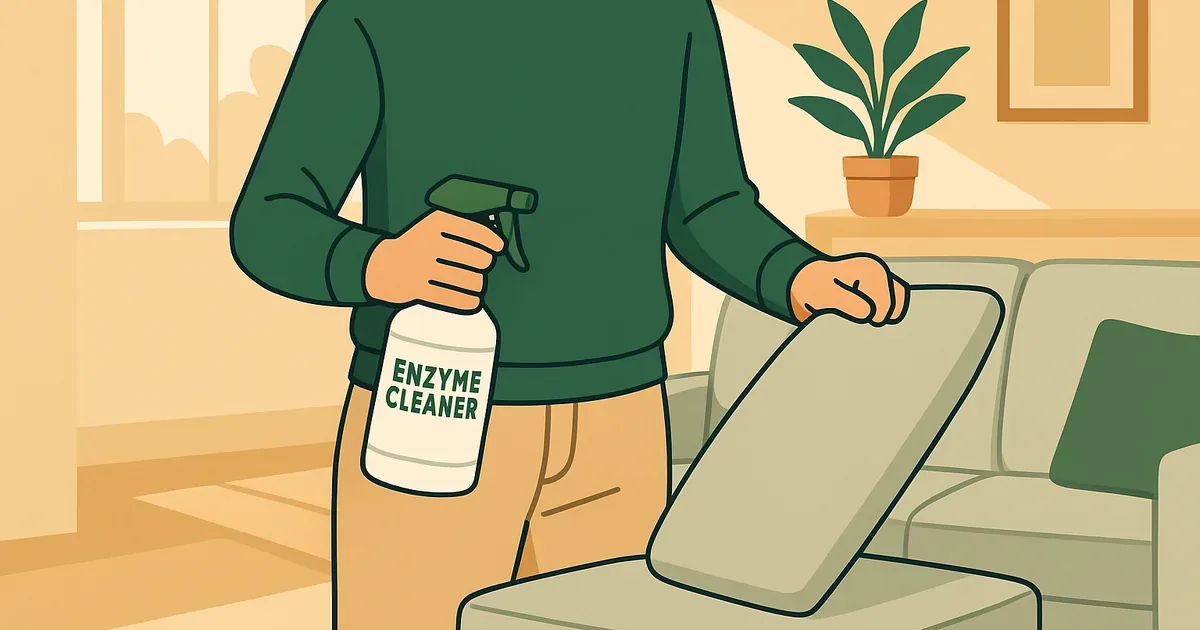
Table of Contents
Blot the area, soak it with an enzyme cleaner, and let it sit for at least 8 hours. But here’s what most guides skip: you need to remove the cushion covers and treat the foam pad and couch frame separately. Cat urine soaks through every layer, and if you only clean the surface, the smell comes back.
We’ll walk you through the full cushion-to-frame treatment, fabric-specific tips, the right products to use, and how to stop your cat from coming back to the same spot.
Affiliate Disclosure: This page contains affiliate links. When you purchase through our links, we may earn a commission at no additional cost to you. Full disclosure.
Why Cat Urine Smell Sticks to Couches
Cat urine contains uric acid crystals that bond to fabric fibers and foam padding. Foam acts like a sponge, pulling urine deep into the cushion core where surface cleaning can’t reach.
Standard cleaners mask the odor but don’t break down those crystals. That’s why the smell keeps returning, especially on humid days when moisture reactivates dried uric acid. To understand the science behind this, read about how enzyme cleaners work.
⚠️ Avoid Ammonia-Based Cleaners
Cat urine contains ammonia. Using an ammonia-based cleaner can actually encourage your cat to pee on the same spot again because the scent signals “bathroom” to them. Stick with enzyme cleaners only.
What You’ll Need
Before you start, gather these supplies:
- Enzyme cleaner (pet-specific formula)
- Clean white cloths or paper towels
- Plastic wrap or garbage bags
- Spray bottle
- UV blacklight (optional, for finding old stains)
You probably have most of these at home already. The enzyme cleaner is the one item you can’t substitute. Check our picks for the best enzyme cleaners for cat urine if you need to buy one.
Step-by-Step: The Full Cushion-to-Frame Protocol
This is the process most guides leave out. You’re not cleaning one surface. You’re cleaning three: the cushion cover, the foam pad, and the couch frame underneath. Treat all three, or the smell comes back.
Step 1. Find Every Affected Spot
Use a UV blacklight in a dark room to locate all stains. Cat urine glows yellow-green under UV light, even stains that dried weeks ago.
Check both sides of cushion covers, the foam pad, and the frame underneath. Mark stain boundaries with painter’s tape so you know exactly where to treat.
Step 2. Remove and Separate Cushion Layers
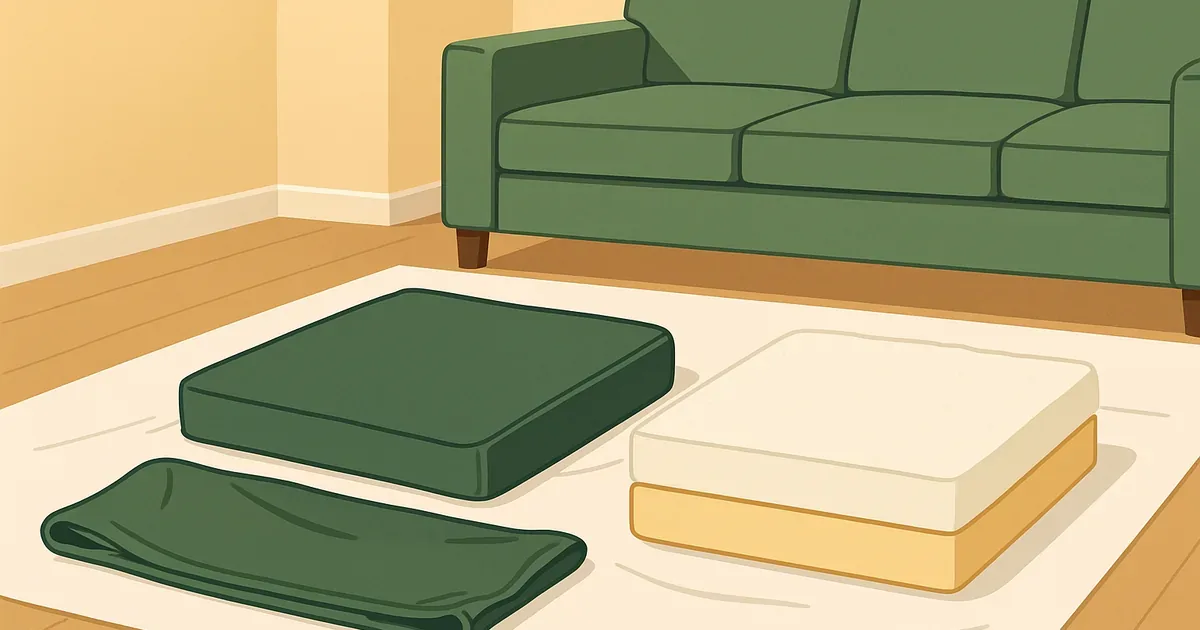
Unzip the cushion cover if possible. Pull out the foam insert. You now have three things to treat separately:
- The fabric cover
- The foam pad
- The couch frame
This separation is the key step. If you spray cleaner on top of an assembled cushion, it won’t reach the urine trapped inside the foam.
Step 3. Blot (Don’t Rub) Fresh Stains
Press clean cloths firmly into the stain to absorb as much liquid as possible. Work from the outside of the stain inward to avoid spreading it.
For dried stains, skip ahead to Step 4. Blotting only helps with fresh accidents. For more on timing, see how long enzyme cleaners take to work.
Step 4. Soak Each Layer with Enzyme Cleaner
This is where you need to be thorough:
- Cushion cover: Saturate both sides of the fabric
- Foam pad: Pour enzyme cleaner through the top until it drips out the bottom
- Couch frame: Spray or pour cleaner directly on the affected area
Don’t be stingy. You need the cleaner to reach everywhere the urine went. If the urine soaked six inches into the foam, the cleaner needs to soak six inches into the foam. For a broader guide on this technique, see our step-by-step urine stain removal guide.
💡 How Much Cleaner Do You Need?
A good rule: use at least as much enzyme cleaner as the amount of urine that soaked in. For a large stain on a couch cushion, you might need half a bottle or more. Underapplying is the most common reason enzyme cleaners seem to fail on couches.
Step 5. Cover and Wait 8-24 Hours
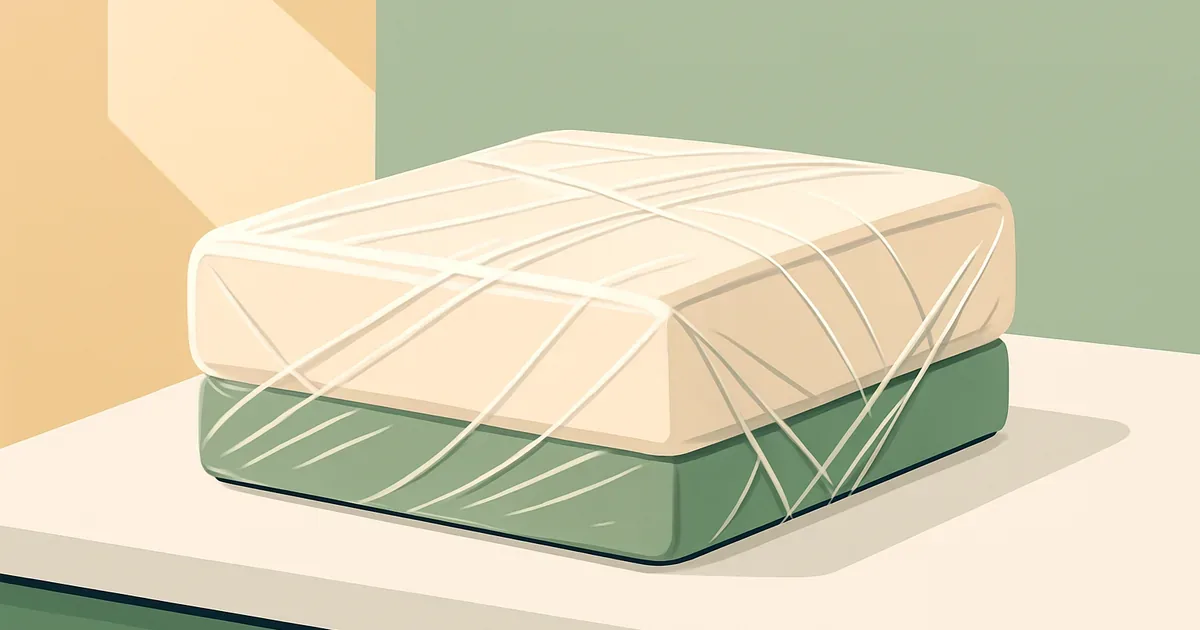
Wrap treated foam in plastic wrap to keep it moist. Cover the frame area with a damp cloth topped with plastic. Enzymes only work while the surface is wet. If the cleaner dries out before it finishes, the treatment fails.
For heavy stains, aim for a full 24-hour soak. Fresh stains can get by with 8 hours.
Step 6. Dry and Assess
Remove all plastic covering and let everything air dry completely. This can take 24-48 hours for thick foam pads. Use fans to speed drying if you can.
Once fully dry, do the sniff test. If the smell is gone, you’re done. If it’s still there, repeat Steps 4 and 5. Some deep stains need 2-3 rounds.
Fabric-Specific Treatment Notes
Different couch fabrics need slightly different approaches. Here’s what to keep in mind for the most common types.
Microfiber
Microfiber handles enzyme cleaners well. It’s one of the easier fabrics to treat. After treatment, blot with distilled water to avoid water rings. Once dry, brush with a soft nylon brush to restore the texture.
Leather and Faux Leather
Test your enzyme cleaner on a hidden spot first. Leather needs less product than fabric, so don’t oversaturate it. After treatment, apply a leather conditioner to prevent drying and cracking.
⚠️ Leather Requires Extra Care
Some enzyme cleaners can discolor or dry out leather finishes. Always spot test on the back or underside of a cushion and wait 24 hours before treating the visible area.
Cotton and Cotton Blend
Cotton is the most forgiving fabric for enzyme treatment. If your cushion covers are removable and machine-washable, wash them on cold with enzyme cleaner added in place of detergent. Don’t use hot water. Heat sets uric acid stains permanently. For more upholstery tips, see our enzyme cleaner for upholstery guide.
Product Recommendations
These enzyme cleaners work well for couch treatment based on our research into user reviews and performance data.
| Product | Best For | Price |
|---|---|---|
| Rocco & Roxie Professional Strength | Overall performance | ~$19.97 |
| Nature’s Miracle Advanced | Cat urine specifically | ~$12.99 |
| Angry Orange enzyme cleaner | Budget option | ~$24.97 |
Prices reflect listings at time of writing and may change.
Our Pick: Rocco & Roxie Professional Strength enzyme cleaner (~$19.97) gives you the strongest enzyme concentration in a ready-to-use spray. It’s our top recommendation for couch treatment because it handles both fresh and moderate set-in stains in fewer applications.
Best for Cat Urine: Nature’s Miracle Advanced enzyme cleaner (~$12.99) is a solid choice if you’re dealing specifically with cat accidents. Read our full Nature’s Miracle review for a breakdown of their different formulas.
For more options, check our roundup of enzyme cleaners for pet odors.
Preventing Re-Marking
Removing the stain is only half the job. You also need to stop your cat from returning to the same spot.
Cats return to areas that still smell like urine to them, even if you can’t detect it. Their noses are far more sensitive than ours. After treatment, run a blacklight test to confirm the stain is fully gone.
Other steps that help:
- Put a waterproof mattress protector under cushion covers for future accidents
- Place a cat deterrent spray on the treated area once it’s clean and dry
- Make sure the litter box is clean, accessible, and in a quiet location
- Talk to your vet if accidents continue, as repeated inappropriate urination often signals a medical issue like a urinary tract infection. The ASPCA has a helpful guide on litter box problems
ℹ️ When to Call a Professional
If urine has soaked through the foam and into the couch frame’s wood or metal structure, a professional upholstery cleaner may be your best option. They have extraction equipment that can pull contaminants from deep inside the frame. The IICRC can help you find a certified upholstery cleaning professional in your area. This is worth considering if you’ve done 3+ enzyme treatments with no improvement.
Frequently Asked Questions
Can I use vinegar to get cat pee smell out of a couch?
How many times do I need to apply enzyme cleaner to a couch?
Will enzyme cleaner stain or damage my couch fabric?
How do I find old cat urine stains on my couch?
Can I put couch cushion covers in the washing machine with enzyme cleaner?
My cat keeps peeing on the same couch spot. What should I do?
Cleaning Product Researcher
Sarah Chen is a pen name for our lead product researcher. A lifelong dog person who now shares her home with two cats, she's no stranger to enzyme cleaners. She writes the guides and reviews on this site based on product research, ingredient analysis, and real user feedback.