Are Enzyme Cleaners Safe for Pets and Kids? (2026)
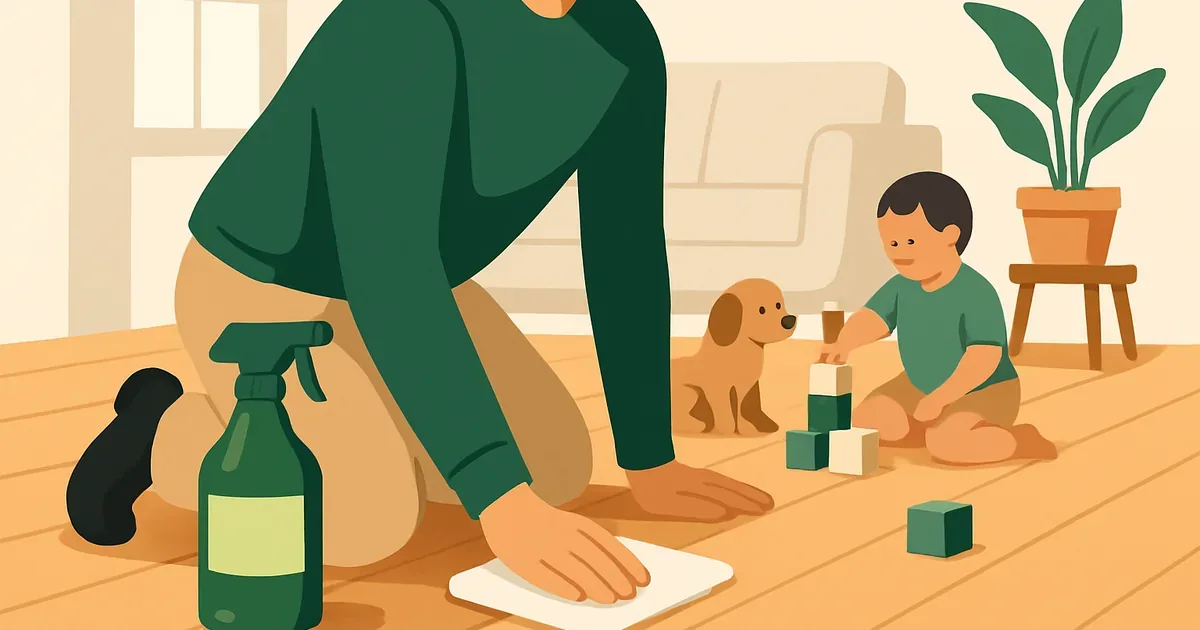
Table of Contents
Yes, most enzyme cleaners are safe for pets and children. They use naturally occurring proteins (enzymes) to break down stains and odors, and they skip the harsh chemicals found in bleach or ammonia-based cleaners. That said, “safe” doesn’t mean “harmless in every situation.” A few precautions make a real difference.
This guide covers which ingredients to watch for, how to handle ingestion and skin contact, specific tips for households with crawling babies or free-roaming cats, and a safe-use checklist you can follow every time. If you’re not sure how these products work, start with our guide on how enzyme cleaners work.
Why enzyme cleaners are safer than most cleaning products
Enzymes are biological catalysts. They’re proteins produced by living organisms, not synthetic chemicals cooked up in a lab. When you spray an enzyme cleaner on a pet stain, the enzymes break down organic matter (urine, vomit, food residue) into water and carbon dioxide. No toxic residue left behind.
Most enzyme cleaners don’t contain bleach, ammonia, or volatile organic compounds (VOCs). That’s a big deal for families with pets and kids. Bleach fumes can irritate lungs. Ammonia burns skin and paw pads. VOCs linger in the air for hours. Enzyme cleaners skip all of that.
Some enzyme cleaners carry the EPA Safer Choice label, which means the EPA has reviewed the formula for human and environmental safety. Not every enzyme cleaner applies for this designation, so a missing label doesn’t automatically mean a product is unsafe. But if you want an extra layer of confidence, look for that label on the bottle.
Here’s a quick comparison of what you’ll find on a typical ingredient list:
| Ingredient Type | Enzyme Cleaner | Typical Bathroom Cleaner |
|---|---|---|
| Active agents | Proteases, lipases, amylases | Bleach, ammonia, acids |
| Surfactants | Plant-based (coconut, corn) | Petroleum-based |
| Fragrance | Often unscented option available | Synthetic fragrance |
| VOCs | None or minimal | Moderate to high |
| pH level | Near neutral (6-8) | Often very acidic or alkaline |
The three safety concerns (and what the data says)
People who search for enzyme cleaner safety usually have one of three worries: ingestion, skin contact, or fumes. Here’s what we know about each one.
Ingestion risk
A small taste or lick from a treated surface is very low risk for both pets and toddlers. The enzymes themselves are proteins, similar to what your body produces during digestion. Once they break down a stain, they become inactive.
The ASPCA Animal Poison Control Center does not list enzyme cleaners as toxic to dogs or cats. That’s a good baseline. If a pet drinks directly from the bottle, call your vet or the ASPCA hotline at 888-426-4435. The volume matters more than the product itself.
For children, the same principle applies. A lick from a cleaned floor won’t cause harm. But if a child swallows a significant amount, call Poison Control at 1-800-222-1222 right away. Keep enzyme cleaners stored out of reach, the same way you would with any cleaning product.
Skin and paw sensitivity
Some pets, especially cats, have sensitive paw pads. Prolonged contact with wet, undiluted enzyme cleaner can cause mild irritation in rare cases. The key word is “prolonged.” Walking across a treated area once is different from lying on a soaked carpet for an hour.
Watch for these signs after your pet contacts a treated surface:
- Redness on paw pads or belly
- Excessive licking of paws
- Limping or reluctance to walk
If you see any of these, rinse the pet’s paws with plain water. To prevent the issue entirely, rinse treated surfaces with water after the enzymes have done their work. This removes any residue before your pet walks on it.
Respiratory and fume concerns
Most enzyme cleaners produce little to no fumes, especially unscented formulas. That’s one of their biggest advantages over bleach and ammonia products.
Fragranced versions are a different story. Added scents can irritate:
- Birds (extremely sensitive respiratory systems)
- Cats (sensitive to airborne chemicals)
- Children with asthma or respiratory conditions
- Anyone with chemical sensitivities
The fix is simple. Choose an unscented or “free and clear” formula. Open a window during application. Let the room air out before bringing pets or kids back in.
Enzyme Cleaner Safety Concerns
| Concern | Risk Level | Who's Most Affected | Prevention |
|---|---|---|---|
| Ingestion | Low | Pets (floor licking), babies | Rinse surfaces, keep bottle stored |
| Skin contact | Very low | Sensitive skin individuals | Rinse treated area after drying |
| Fumes/airborne | Low-moderate | Birds, cats, asthma sufferers | Choose unscented, ventilate room |
Ingredient watch list for pet and child households
Not every enzyme cleaner is the same. The enzymes themselves are safe. It’s the other ingredients that sometimes cause problems. Here’s what to look for on the label.
Ingredients that are fine:
- Proteases (break down proteins)
- Lipases (break down fats)
- Amylases (break down starches)
- Plant-based surfactants (coconut-derived, corn-derived)
Ingredients to avoid in pet and child households:
- Phenols and phenolic compounds (toxic to cats, can cause liver damage)
- Essential oils (tea tree, eucalyptus, and peppermint are toxic to cats; some are harmful to dogs)
- Isopropyl alcohol in high concentrations (skin and respiratory irritant)
- Artificial fragrances (can trigger asthma and irritate sensitive pets)
When reading a product label, look for the enzyme type listed under “active ingredients” and check the “inactive ingredients” or “other ingredients” section for anything on the avoid list.
⚠️ Phenols and Cats Don't Mix
If a product contains phenol or phenolic compounds, keep it away from cats entirely. Cats lack a specific liver enzyme (glucuronyl transferase) needed to process phenols. Even small amounts can cause serious health problems. This applies to cleaning products, disinfectants, and some air fresheners.
Safe application checklist for families
Follow these steps every time you use an enzyme cleaner in a home with pets or children. It only takes a few extra minutes and removes the guesswork.
-
Remove pets and children from the room before spraying. Close the door or use a baby gate.
-
Apply the enzyme cleaner to the stain or odor source. Follow the product’s directions for amount.
-
Allow full contact time. Check the product label. Most enzyme cleaners need 10-30 minutes for fresh stains. Don’t rush this step.
-
Blot or wipe the area with a clean cloth once the contact time is up.
-
Rinse the surface with plain water to remove any cleaner residue. This is especially important on floors where pets walk or babies crawl.
-
Let the area dry completely before letting pets or kids back in. Point a fan at the spot to speed things up.
-
Store the bottle out of reach on a high shelf or in a locked cabinet. Treat it like any other cleaning product.
💡 Extra Rinse for Crawling Babies
For crawling babies, rinse the treated area twice. Babies put their hands in their mouths constantly, and even a safe product is best removed from floor surfaces. A quick second pass with a damp cloth takes 30 seconds and gives you peace of mind.
Safe Application Checklist for Pets and Kids
Special cases: cats, birds, and babies under 12 months
Most households can follow the general checklist above and call it done. But a few situations need extra attention.
Cats
Cats are more sensitive to cleaning products than dogs for one simple reason: they groom their paws. Any residue left on the floor ends up in their mouth.
To keep cats safe:
- Avoid enzyme cleaners with essential oils (tea tree, eucalyptus, and peppermint are all toxic to cats)
- Avoid products with phenols or phenolic compounds
- Choose enzyme cleaners labeled “cat safe” or “veterinarian recommended”
- Rinse treated floors thoroughly before your cat walks on them
- Keep cats out of the room during the full contact time and drying period
For product recommendations, see our picks for the best enzyme cleaners for cat urine. Every product on that list was evaluated for cat safety.
Birds
Birds have the most sensitive respiratory systems of any common household pet. What’s barely noticeable to you can be dangerous to a bird.
Follow these rules:
- Use enzyme cleaners in a different room from the birdcage
- Ventilate the room fully before bringing birds back (open windows for at least 30 minutes)
- Never spray any cleaner near a birdcage, even an “unscented” one
- Choose the simplest formula available with the fewest added ingredients
Babies and toddlers
Babies explore floors with their hands and mouths. Toddlers are even more creative about what they touch and taste. Both groups need extra precautions.
Here’s what works:
- Rinse treated surfaces thoroughly after cleaning (twice for floors where babies crawl)
- Use unscented formulas to reduce airborne irritants
- Let surfaces dry fully before allowing floor play
- Store bottles in a cabinet with a child safety lock
- If your baby puts their mouth on a cleaned surface and you’re concerned, give them water and monitor for any unusual behavior
For households with babies and pets, the pet stain and odor removers we recommend include several options that work well in family settings.
⚠️ Bleach + Urine = Chlorine Gas
Never use bleach to clean pet urine. Bleach reacts with the ammonia in urine to produce chlorine gas, which is genuinely dangerous to inhale. This reaction can happen on a floor, in a litter box area, or anywhere urine residue meets bleach. Enzyme cleaners don’t have this risk because they break down the urine rather than reacting with it.
Enzyme cleaners vs. chemical cleaners: a safety comparison
If you’re weighing enzyme cleaners against other options, here’s how they stack up for households with pets and kids.
| Safety Factor | Enzyme Cleaners | Bleach-Based | Ammonia-Based |
|---|---|---|---|
| Skin/paw irritation | Low risk | High risk (burns) | High risk (burns) |
| Ingestion risk | Low (non-toxic enzymes) | High (corrosive) | High (corrosive) |
| Fumes | Minimal to none | Strong, irritating | Strong, irritating |
| Pet grooming risk | Low after drying | Dangerous if residue remains | Dangerous if residue remains |
| Safe for birds | Yes (unscented) | No | No |
| Mixes with urine safely | Yes | No (creates chlorine gas) | Already in urine (amplifies smell) |
That last row matters more than people realize. Bleach reacts with the ammonia in urine to create chlorine gas, which is genuinely dangerous. Enzyme cleaners don’t have this problem because they break down the urine rather than reacting with it.
ℹ️ Consult Your Vet
If your pet has a known sensitivity to cleaning products or a chronic health condition, talk to your veterinarian before using any new cleaning product. They can review the ingredient list and give you specific guidance for your pet’s situation.
The bottom line
Enzyme cleaners are one of the safest cleaning product categories for homes with pets and children. They use biological proteins instead of harsh chemicals, they don’t produce toxic fumes, and they break down into harmless byproducts.
The key precautions are straightforward: check the ingredient list for phenols and essential oils (especially if you have cats), rinse treated surfaces before pets and kids access them, and store bottles out of reach. Follow the checklist above, and you’ll have a clean home without the safety worries. For more on enzyme cleaners for specific uses, see our guides on hardwood floors, mattresses, and urine stain removal. For allergy-sensitive households, see our picks for allergy-friendly enzyme cleaners.
For specific product picks, check out our lists of enzyme cleaners safe for puppies and eco-friendly enzyme cleaners for more options that work well in family households.
Frequently Asked Questions
Can my dog lick a surface cleaned with enzyme cleaner?
Are enzyme cleaners safe to use around cats?
What happens if a child drinks enzyme cleaner?
Do enzyme cleaners give off toxic fumes?
Are enzyme cleaners safer than bleach for pet households?
Which enzyme cleaners have the EPA Safer Choice label?
Related Articles
Cleaning Product Researcher
Sarah Chen is a pen name for our lead product researcher. A lifelong dog person who now shares her home with two cats, she's no stranger to enzyme cleaners. She writes the guides and reviews on this site based on product research, ingredient analysis, and real user feedback.