How to Remove Pet Urine Smell from Carpet (2026)
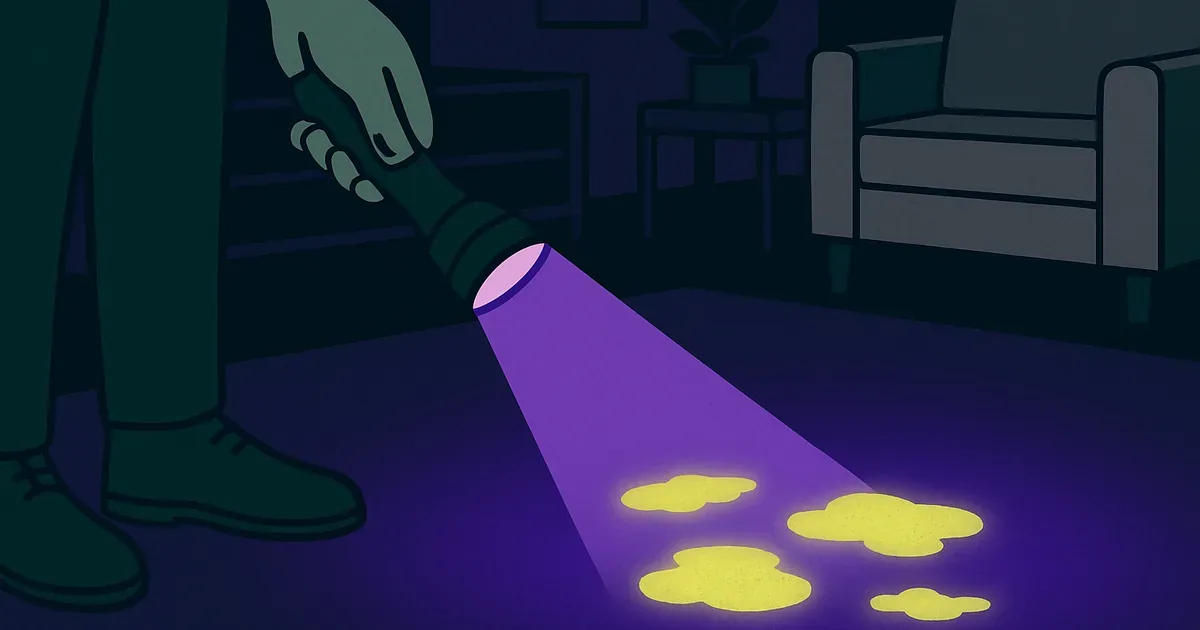
Table of Contents
If your carpet still smells like pet urine after cleaning, the odor is almost certainly trapped in the carpet pad underneath, not the carpet fibers you’ve been scrubbing. Surface spraying won’t fix it. You need to saturate the spot with an enzyme cleaner so it reaches the pad, cover it, and let enzymes work for 12-24 hours.
Here’s the full step-by-step process, including how to find hidden spots, the right products, and what to do when nothing seems to work.
Affiliate Disclosure: This page contains affiliate links. When you purchase through our links, we may earn a commission at no additional cost to you. Full disclosure.
Why Pet Urine Smell Keeps Coming Back
You cleaned the carpet. It smelled fine for a few days. Then the smell returned. Here’s why.
When a pet urinates on carpet, the liquid doesn’t stop at the surface. It soaks through the carpet fibers, through the carpet pad, and sometimes into the subfloor material (wood or concrete) underneath. Surface cleaning only treats the top layer.
As urine dries, it forms uric acid crystals. These crystals sit in the carpet pad and are odorless when dry. But add humidity (a rainy day, steam from a shower, vacuuming that stirs up moisture) and they reactivate, releasing that familiar smell. This is the “phantom smell” that drives pet owners crazy.
ℹ️ The Phantom Smell
If you only smell the urine on humid days or after vacuuming, uric acid crystals in the carpet pad are reactivating. Surface cleaning won’t reach them. You need to soak enzyme cleaner through the carpet to the pad level.
To understand the chemistry behind this, read about how enzyme cleaners work.
How to Find All the Urine Spots
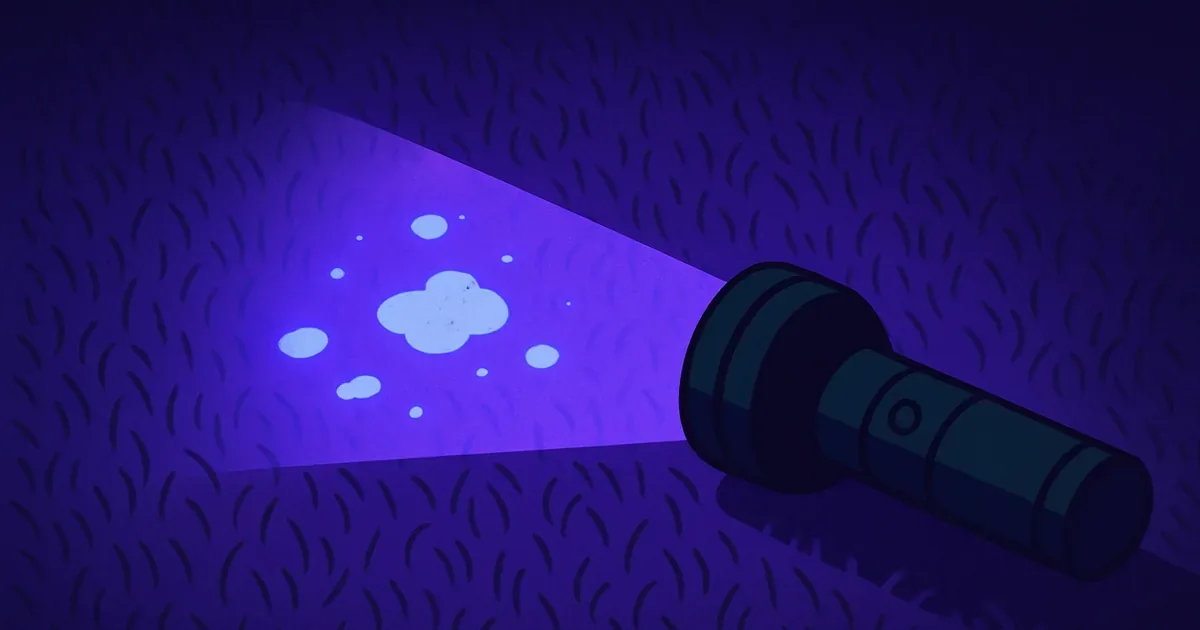
You can’t fix what you can’t find. Many urine spots are invisible to the eye but still hold odor. A UV blacklight flashlight solves this problem.
Here’s how to scan your carpet:
- Wait until dark or close all blinds and curtains. The room needs to be as dark as possible.
- Hold the UV flashlight 1-2 feet above the carpet. Move slowly across the floor in a grid pattern.
- Look for greenish-yellow glowing spots. Cat urine glows brighter than dog urine under UV light.
- Mark each spot with painter’s tape. You’ll need to find them again with the lights on.
- Check baseboards and wall edges too. Urine wicks sideways along the carpet pad and can spread wider than the visible stain.
💡 Worth the $15
A UV blacklight flashlight pays for itself. You’ll almost always find spots you didn’t know about. Look for one with LED bulbs in the 365-385nm range for the best fluorescence detection.
The Enzyme Soaking Technique (Step-by-Step)
This is the core technique. The key difference between this method and what most people do: you pour, you don’t spray. Here’s the full process.
-
Blot up any wet urine. Use paper towels and press firmly. Don’t rub. Stand on the towels to apply body weight. For old dry stains, skip to step 2.
-
Calculate the enzyme cleaner amount. You need enough to saturate through the carpet to the pad. For a spot the size of a dinner plate, that’s about 8-12 oz of enzyme cleaner. The cleaner needs to reach every layer the urine reached.
-
Pour (don’t spray) the enzyme cleaner. This is the step most people get wrong. Spraying only wets the surface. Pouring ensures the cleaner soaks through carpet fibers to the pad where the odor actually lives.
-
Cover with a damp towel. Place a wet towel over the treated area and weigh it down with a heavy book or pot. This keeps the enzymes moist and active. Enzymes stop working when they dry out.
-
Wait 12-24 hours. Don’t uncover it. Don’t add fans. Don’t let it dry out. The enzymes need sustained contact time to break down uric acid crystals in the pad.
-
Remove the towel and let it air dry. Air dry only. No heat, no fans, no hair dryers. Heat denatures (kills) any remaining active enzymes.
-
Check with your UV light. Re-scan the spot with your blacklight after it’s fully dry. If it still glows, repeat the entire process.
⚠️ No Hot Water
Never use hot water with enzyme cleaners. Heat kills the enzymes before they can break down the uric acid crystals. Use cold or room temperature water for dampening cloths and rinsing.
For more on the timing and process, read about how long enzyme cleaners take to work.
Best Enzyme Cleaners for Carpet Urine Odor
Not all enzyme cleaners are equal. Here are our picks based on the severity of your problem.
For Most Carpet Urine
| Product | Price | Best For |
|---|---|---|
| Rocco & Roxie | ~$19.97 | Strong all-around pick |
| Nature’s Miracle Advanced | ~$12.99 | Solid budget choice |
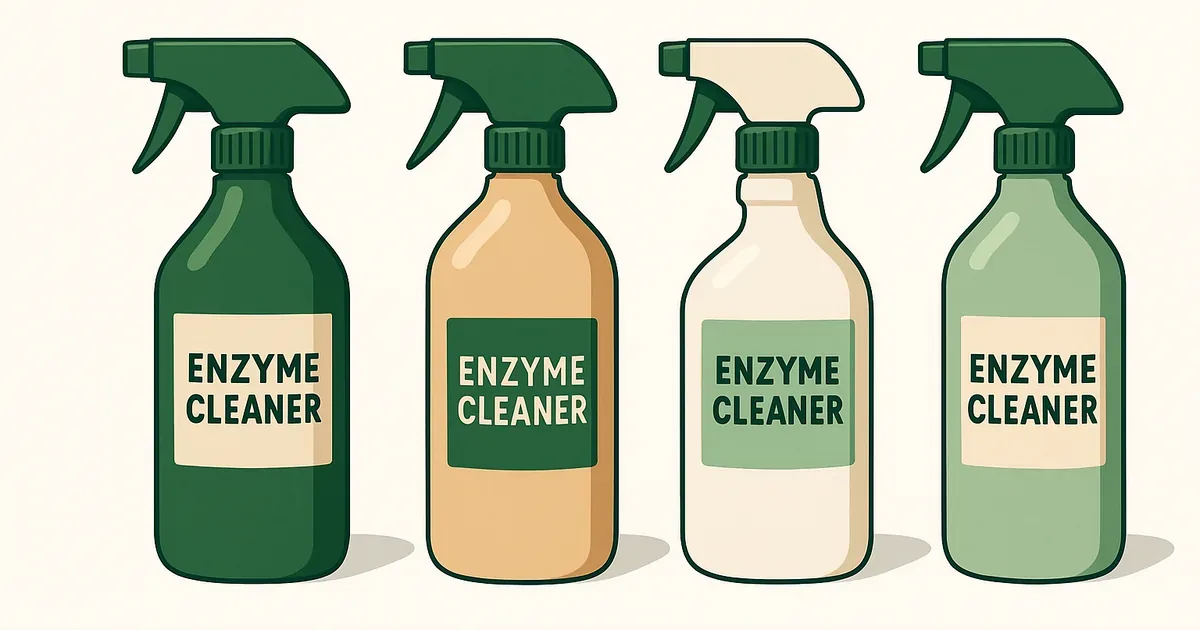
Rocco & Roxie enzyme cleaner (~$19.97) is our top pick for most carpet urine situations. It has strong protease enzymes and works on carpet pad when saturated properly using the technique above.
Nature’s Miracle Advanced enzyme cleaner (~$12.99) is a solid budget alternative. It may need a second application on moderate stains, but the lower price makes repeat treatments affordable. Look for it at the best enzyme cleaners for dog urine roundup.
For Severe or Old Urine
| Product | Price | Best For |
|---|---|---|
| Anti Icky Poo | ~$29.95 | Worst-case stains |
| Green Gobbler | ~$19.99 | Tough jobs, mid-range price |
Anti Icky Poo enzyme cleaner (~$29.95) has the highest enzyme concentration of any consumer product we’ve researched. Professional carpet cleaners recommend it for the worst cases. If Rocco & Roxie didn’t work after two rounds, try this.
Budget Picks
- Simple Solution Extreme enzyme cleaner (~$11.99): affordable with decent enzyme action for moderate stains
- Kids ‘N’ Pets stain remover (~$8.49): cheapest option, best for fresh stains only
All prices reflect listings at time of writing and may change.
For a complete list, see our roundup of best enzyme carpet cleaners and best enzyme cleaners for pet odors.
What Doesn’t Work (And Makes It Worse)
Some popular cleaning methods are useless for urine odor. A few actually make the problem permanent.
- Vinegar: Masks odor temporarily but doesn’t break down uric acid crystals. The smell returns when humidity rises.
- Baking soda alone: Absorbs some surface odor but can’t reach the carpet pad. Useful as a finishing step after enzyme treatment, not as a standalone fix.
- Steam cleaning: This is the big one. Heat from steam cleaning bonds uric acid crystals to carpet fibers permanently. Once bonded, even enzymes struggle to break them down.
- Air fresheners and deodorizers: Cover up the smell without addressing the source. The uric acid crystals remain.
- Bleach: Damages carpet, is toxic to pets, and doesn’t break down organic compounds. Avoid completely.
⚠️ Steam Cleaning Warning
Steam cleaning a urine spot before treating with enzymes can make the odor permanent. The heat bonds uric acid to carpet fibers. Always use enzyme cleaner first. Only steam clean after the enzymes have fully broken down the urine compounds.
For step-by-step carpet cleaning guidance, read our guide on how to use enzyme cleaner on carpet.
When the Smell Won’t Go Away
Sometimes enzyme soaking isn’t enough. Here’s what to look for and what your options are.
Signs of Subfloor Saturation
If the enzyme soaking technique doesn’t work after two full treatments, the urine has likely soaked through the carpet pad into the subfloor (wood or concrete). At this point, you have a few options:
- Pull up the carpet and pad. Treat the subfloor directly with enzyme cleaner. Replace the pad. Re-lay the carpet or install new carpet.
- Treat concrete subfloors. Concrete absorbs urine deep into its pores. You’ll need to seal the concrete after enzyme treatment to lock in remaining odor. Read our guide on enzyme cleaner for concrete.
- Call a professional. IICRC-certified carpet cleaners have sub-surface extraction tools that can pull contamination from the carpet pad without removing it. Expect $100-200 per room for pet urine treatment.
When to Replace the Carpet
If a large area is saturated and the subfloor is affected, replacement is sometimes the most cost-effective option. The cost of multiple professional treatments can approach the cost of new carpet and pad. Get quotes for both before deciding.
For a deeper look at heavy-duty carpet treatment, see our guide on deep cleaning carpet with enzyme cleaner.
Preventing Future Urine Odor Problems
Prevention is easier than treatment. A few habits make a big difference:
- Treat accidents within 30 minutes. Fresh urine is much easier to clean than dried, crystallized urine. Keep an enzyme cleaner on hand so you can act fast.
- Stock enzyme cleaner at home. Don’t wait until you need it to buy it. Having a bottle ready means faster response times.
- Use a waterproof carpet pad liner. In high-risk areas (pet zones, near doors), a waterproof liner between the carpet and pad prevents urine from reaching the subfloor.
- UV-scan monthly. If you have a pet with a history of accidents, a quick monthly blacklight scan catches new spots early.
- Address the root cause. Medical issues, training gaps, litter box problems, and anxiety all cause indoor accidents. Fixing the behavior is the only permanent solution.
The PubChem entry on uric acid explains the chemical structure that makes it so resistant to regular cleaning. The Carpet and Rug Institute also has resources on proper carpet maintenance and finding certified cleaning professionals.
For product guidance, see our picks for the removing urine stains with enzyme cleaner.
Frequently Asked Questions
Why does my carpet still smell like urine after cleaning?
Does baking soda remove pet urine smell from carpet?
How much enzyme cleaner do you need for carpet urine?
Can professional carpet cleaners remove pet urine smell?
Does pet urine smell go away on its own?
Is steam cleaning good for pet urine in carpet?
Related Articles
Cleaning Product Researcher
Sarah Chen is a pen name for our lead product researcher. A lifelong dog person who now shares her home with two cats, she's no stranger to enzyme cleaners. She writes the guides and reviews on this site based on product research, ingredient analysis, and real user feedback.