What Is a Biological Cleaner? Types Explained
Table of Contents
A biological cleaner is any cleaning product that uses living organisms or biological compounds to break down stains, odors, and organic buildup. The term covers three main types: enzyme cleaners, probiotic cleaners, and bacteria-based cleaners. All of them work by breaking down organic matter at the molecular level rather than dissolving it with chemicals.
If you’ve used an enzyme cleaner on a pet stain, you’ve already used a biological cleaner. But the category is broader than most people realize. This guide covers what makes a cleaner “biological,” the three main types, and how they compare to traditional chemical cleaning products.
What Makes a Cleaner “Biological”?
A cleaner earns the “biological” label when it uses living organisms or their byproducts as the active cleaning agent. Instead of acids, solvents, or surfactants doing the heavy lifting, biological cleaners rely on biochemical reactions driven by enzymes and bacteria.
The key differences from chemical cleaners:
- Active agents are biological: enzymes (proteins), bacteria (living organisms), or probiotics (beneficial microorganisms)
- They target organic matter specifically: proteins, fats, starches, cellulose, and other carbon-based compounds
- They break stains down into smaller molecules that dissolve in water and rinse away
- They continue working as long as they stay moist and have organic matter to process
The term “bio-enzymatic” shows up on a lot of product labels. That’s the most common sub-type. It means the product contains both bacteria and enzymes working together. Our full explainer on how enzyme cleaners work covers the enzyme side in detail.
ℹ️ Note
Most products labeled “enzyme cleaner” are actually bio-enzymatic. They contain bacteria that produce fresh enzymes continuously. Pure enzyme-only formulas (with no live bacteria) exist but are less common in consumer products.
Three Types of Biological Cleaners
The term “biological cleaner” is an umbrella. Under it sit three distinct approaches, each with different strengths.
Enzyme Cleaners
Enzyme cleaners contain concentrated proteins called enzymes. Each enzyme type targets a specific kind of organic molecule. The three most common types are proteases, lipases, and amylases.
What they break down:
- Proteases: protein-based stains (urine, blood, sweat, vomit)
- Lipases: fat and grease stains (cooking grease, oil, butter)
- Amylases: starch-based stains (food residue, pasta sauce, baby formula)
Enzyme cleaners are the most popular type of biological cleaner for home use. They’re what most people reach for when dealing with pet stains, food spills, or laundry stains. The enzymes work quickly on fresh stains and can handle set-in organic messes with enough contact time.
For a deeper look at how long enzyme cleaners take to work, we have a full breakdown by stain type and surface.
Probiotic Cleaners
Probiotic cleaners contain live beneficial bacteria, similar to the probiotics in yogurt. These bacteria colonize surfaces and continue producing enzymes over time. The cleaning action doesn’t stop when the surface dries.
What sets probiotic cleaners apart:
- Continuous cleaning: bacteria keep producing enzymes as long as organic matter is present
- Surface colonization: beneficial bacteria can outcompete odor-causing bacteria on treated surfaces
- Ongoing odor control: particularly effective for persistent smells in pet areas, bathrooms, and kitchens
- Slower initial action but longer-lasting results
Probiotic cleaners work best for maintenance cleaning and ongoing odor control. They’re less suited for heavy stain removal jobs. The Bastion probiotic enzyme cleaner is one example that combines both approaches.
Bacteria-Based (Bio-Enzymatic) Cleaners
Bio-enzymatic cleaners combine live bacteria with added enzymes. The bacteria produce fresh enzymes on-site while the pre-loaded enzymes start working right away. You get both immediate and sustained cleaning action.
This type is especially common in:
- Drain cleaners (bacteria digest organic buildup in pipes)
- Septic system treatments (bacteria break down solid waste)
- Grease trap cleaners (bacteria consume fats and oils continuously)
- Odor eliminators for heavy-duty applications
Our roundup of the best enzyme drain cleaners features several bio-enzymatic products. For septic use, see our guide on enzyme cleaners for septic systems.
💡 Tip
To match a biological cleaner to your problem, think about what you’re cleaning. For a one-time stain, an enzyme cleaner works fast. For ongoing odor in a pet area, a probiotic formula gives sustained results. For drains and septic, go bio-enzymatic.
Biological Cleaners vs Chemical Cleaners
These two categories approach cleaning from opposite directions. Neither is better across the board. Each excels in different situations.
| Feature | Biological Cleaners | Chemical Cleaners |
|---|---|---|
| How they work | Enzymes/bacteria break down organic molecules | Acids, bases, or solvents dissolve or react with stains |
| Speed | Slower (15 min to 24 hours) | Faster (seconds to minutes) |
| Best for | Organic stains (urine, food, grease, blood) | Inorganic stains (mineral deposits, rust, soap scum) |
| Ongoing action | Yes (bacteria keep working) | No (stops when product dries or is wiped away) |
| Safety profile | Generally gentler, often considered non-toxic | Varies widely, some are caustic or irritating |
| Environmental impact | Low (biodegradable byproducts) | Varies (some are harsh on waterways) |
| Disinfecting ability | No (unless EPA-registered) | Yes (bleach, quaternary ammonium, etc.) |
The enzyme cleaners vs vinegar comparison is one of the most common matchups. Vinegar is a mild acid (chemical) that works on mineral deposits but can’t break down proteins. Enzyme cleaners break down proteins but don’t touch mineral buildup. They solve different problems.
⚠️ Warning
Never use a biological cleaner and a chemical cleaner on the same spot at the same time. Bleach, ammonia, strong acids, and even vinegar can kill the bacteria and deactivate the enzymes in biological products. If you need to disinfect after using a biological cleaner, rinse the area first. Then apply your disinfectant separately.
What Can Biological Cleaners Clean?
Biological cleaners work on anything organic. If the stain or odor comes from a living source, a biological cleaner can probably break it down.
Common applications:
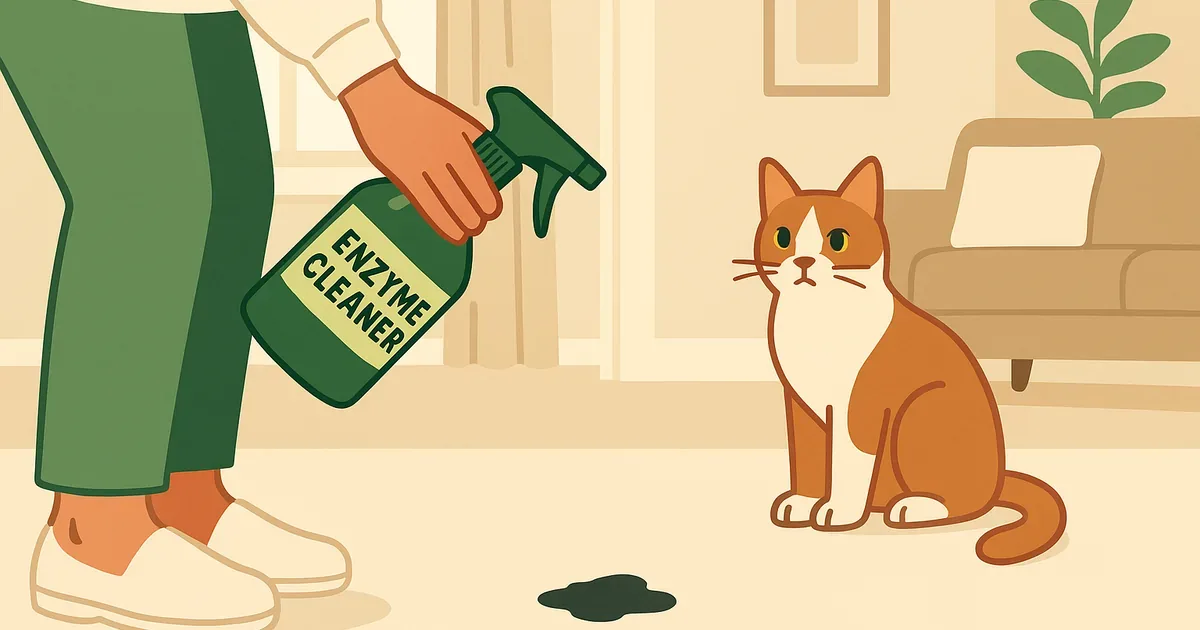
- Pet stains and odors (urine, vomit, feces, general pet smell)
- Kitchen grease and food residue on counters, stovetops, and floors
- Drain buildup from food, hair, soap, and organic sludge
- Laundry stains from sweat, food, blood, and grass
- Bathroom surfaces with soap scum and organic buildup
- Septic system maintenance to keep tanks breaking down waste
- Garbage disposals to eliminate trapped food odors
- Outdoor surfaces like concrete, patios, and deck stains
They don’t work on inorganic stains like rust, hard water deposits, or mineral scale. For those, you need a chemical approach.
How to Choose the Right Biological Cleaner
Matching the right type of biological cleaner to your problem saves time and money. Here’s a quick decision framework.
For stain removal (one-time cleanup):
- Pick an enzyme cleaner with the right enzyme type for your stain
- Proteases for pet stains and blood
- Lipases for grease and oil
- Amylases for food and starch stains
For ongoing odor control:
- Pick a probiotic cleaner for sustained bacteria colonization
- Best for pet areas, litter box zones, and rooms with persistent smells
For drains, septic, and heavy organic buildup:
- Pick a bio-enzymatic cleaner with live bacteria
- The bacteria digest buildup continuously over time
For eco-friendly cleaning:
- Look for EPA Safer Choice certified products
- Our roundup of eco-friendly enzyme cleaners covers verified options
- The EPA also provides guidance on indoor air quality and choosing less toxic cleaning products
ℹ️ Note
Check the product label for specific enzyme types. A cleaner that lists “protease” is designed for protein stains. One that lists “lipase” targets grease. Products that list multiple enzyme types handle a broader range of messes. Our guide on enzyme cleaner safety for pets and kids explains what to look for on the label.
The Bottom Line
Biological cleaners use nature’s own tools (enzymes, bacteria, probiotics) to break down organic messes. They’re slower than chemical cleaners but more thorough on organic stains. They’re generally gentler on surfaces, safer around pets and children, and easier on the environment.
The category is broader than just “enzyme cleaners.” Probiotic and bacteria-based formulas bring their own strengths, especially for ongoing odor control and drain maintenance. Understanding which type fits your situation helps you pick the right product and get better results.
If you’re new to biological cleaning, start with a quality enzyme cleaner for your specific problem. Our guides cover the best options for every common use case, from pet stains to drains to laundry.
Frequently Asked Questions
Are biological cleaners the same as enzyme cleaners?
Do biological cleaners disinfect?
Are biological cleaners safe for septic systems?
Can you mix biological cleaners with bleach or vinegar?
How long do biological cleaners take to work?
Are biological cleaners better for the environment?
Related Articles
Cleaning Product Researcher
Sarah Chen is a pen name for our lead product researcher. A lifelong dog person who now shares her home with two cats, she's no stranger to enzyme cleaners. She writes the guides and reviews on this site based on product research, ingredient analysis, and real user feedback.