How to Remove Pet Stains and Odors (Every Surface)
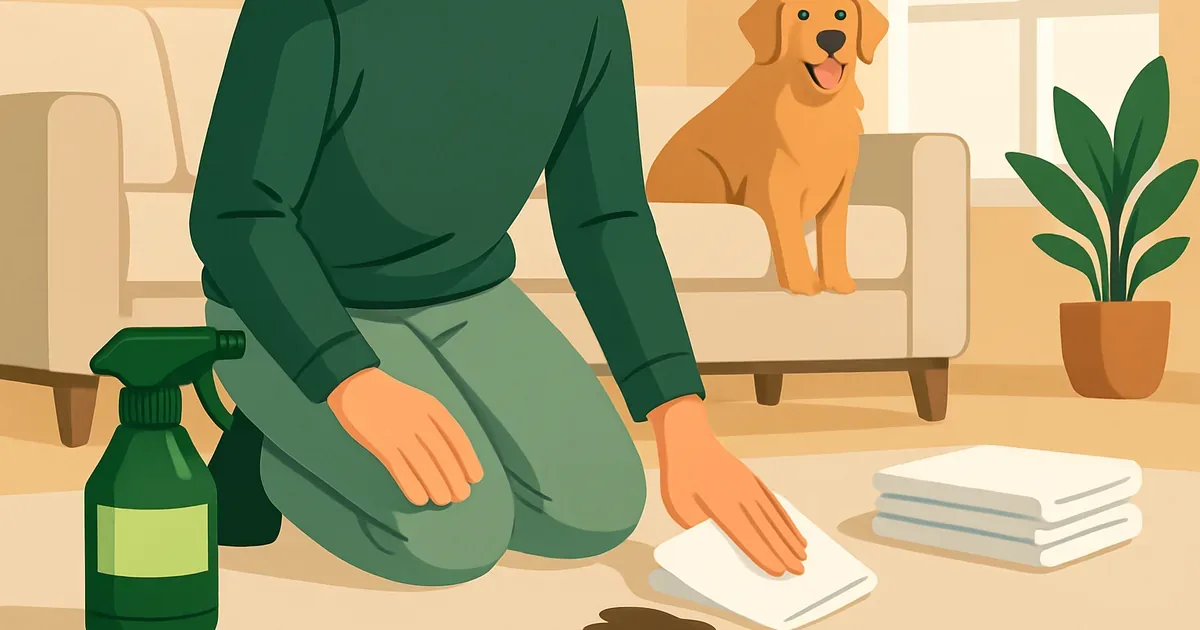
Table of Contents
The fastest way to remove any pet stain is to blot (never rub), apply an enzyme cleaner, and let it sit for the recommended time. Enzyme cleaners break down the organic compounds in urine, vomit, feces, and drool at the molecular level. That stops odors at the source instead of just covering them up. The right approach depends on the surface and the type of stain.
This guide covers step-by-step methods for every common pet stain on every common surface, plus product picks and prevention tips.
Affiliate Disclosure: This page contains affiliate links. When you purchase through our links, we may earn a commission at no additional cost to you. Full disclosure.
If you’re not familiar with enzyme-based products, start with our explainer on how enzyme cleaners work.
The Golden Rules of Pet Stain Removal
These rules apply to every stain type and every surface. Follow them every time.
- Act fast. Fresh stains are far easier to remove than set-in ones. Every hour a stain sits, it bonds deeper into the material.
- Blot, never rub. Rubbing pushes the stain deeper into fibers and spreads it wider. Press a clean cloth straight down and lift.
- Use enough product. The enzyme cleaner needs to reach as deep as the stain. If urine soaked 2 inches into carpet, your cleaner needs to soak 2 inches down too.
- Give it time. Enzymes need 8-24 hours to fully break down organic matter. Rushing this step is the most common reason people think enzyme cleaners don’t work.
- Never use hot water on protein stains. Urine, vomit, and blood contain proteins. Heat sets proteins into fibers and makes them permanent.
💡 Keep a Bottle Ready
Keep an enzyme cleaner spray bottle in every room where your pet spends time. The faster you treat a stain, the less effort it takes to remove. A $13 bottle of enzyme cleaner can save you $200 in carpet cleaning fees.
Stain-by-Stain Guide
Different stains have different compositions. Here’s how to handle each one.
Urine (Dog and Cat)
Urine is the most common pet stain and the hardest to fully remove. It contains uric acid crystals that bond to fibers and release odor for months if not broken down by enzymes. You can learn more about the chemistry from PubChem’s uric acid profile.
- 1. Blot up as much liquid as possible with paper towels or a clean cloth
- 2. Saturate the area with enzyme cleaner, covering 2-3 times the visible stain size (urine spreads wider below the surface)
- 3. Cover with plastic wrap or a damp cloth to keep the area moist
- 4. Wait 12-24 hours for set-in stains, 4-8 hours for fresh ones
- 5. Blot dry and check for remaining odor
Cat urine is more concentrated than dog urine and may need repeat treatments. See our picks for the best enzyme cleaners for cat urine and enzyme cleaners for dog urine.
For a detailed walkthrough, read our step-by-step urine stain removal guide.
Vomit
Vomit is primarily protein-based and responds well to protease enzymes.
- 1. Remove solid matter with a spatula or stiff cardboard (scrape, don’t smear)
- 2. Blot remaining moisture
- 3. Apply enzyme cleaner with protease enzymes generously
- 4. Wait 4-8 hours
- 5. Blot dry and repeat if needed
Feces
- 1. Remove solid matter carefully by scraping (work from the outside in)
- 2. Blot any remaining moisture
- 3. Apply enzyme cleaner generously to the affected area
- 4. Wait 4-8 hours
- 5. Sanitize the surface after enzyme treatment dries, since enzyme cleaners don’t disinfect
Drool and Slobber
Dried drool leaves a stiff, crusty residue on furniture and floors. It’s protein-based, so enzyme cleaners with protease handle it well.
- 1. Wipe up fresh drool with a damp cloth
- 2. Spray dried drool stains with enzyme cleaner
- 3. Wait 30-60 minutes, then blot
- 4. Repeat for stubborn dried spots
Blood
- 1. Rinse with cold water first (never hot, which sets blood proteins)
- 2. Apply enzyme cleaner to the stain
- 3. Wait 2-4 hours
- 4. Reapply if needed for dried blood
For more details, see our guide on using an enzyme cleaner for blood stains.
⚠️ Don't Mix Products
Never mix enzyme cleaners with bleach, hydrogen peroxide, or vinegar. These products deactivate enzymes on contact and cancel out the cleaning action. If you’ve already treated a stain with another product, rinse thoroughly with plain cold water before applying an enzyme cleaner.
Surface-by-Surface Guide
The same stain needs different treatment depending on where it landed.
Carpet
Carpet is the toughest surface to clean because stains soak through three layers: fibers, backing, and pad.
- Saturate down to the pad with enzyme cleaner (use 8-16 oz for large stains)
- Cover with plastic wrap to keep the area moist during treatment
- Wait the full recommended time before checking results
- For severe stains, you may need a second application
For product picks, see our list of enzyme carpet cleaners and our guide to removing pet stains from carpet.
Hardwood Floors
- Sealed hardwood: Apply enzyme cleaner, wait 15-30 minutes, wipe dry. Sealed wood repels liquid, so stains usually sit on the surface.
- Unsealed hardwood: Limit liquid exposure. Use multiple light applications instead of one heavy soak. Never let enzyme cleaner pool on unsealed wood.
Tile and Grout
Tile is easy to clean, but grout lines are porous and trap odor compounds.
- Spray tile surface and scrub grout lines with a stiff brush
- Let enzyme cleaner sit in grout lines for 30-60 minutes
- Rinse and dry
Upholstery and Couches
- Check the fabric care tag before applying anything
- Use the spray-and-blot method for most fabrics
- Don’t oversaturate cushions with removable covers. Take the cover off and treat it separately.
For couch-specific instructions, read our guide on removing cat urine from a couch.
Mattresses
- Blot the stain, spray enzyme cleaner, and let it air dry completely
- Use a waterproof mattress protector after treatment to prevent future soaking
For the full process, see our guide to using an enzyme cleaner on a mattress.
Concrete (Garage, Basement)
Concrete is extremely porous and absorbs urine deep into its surface.
- Saturate the area and cover with plastic wrap
- Allow 24-48 hours of contact time
- Repeat applications are common for concrete since the stain goes deep
💡 Sealed vs Unsealed Surfaces
Sealed surfaces (finished hardwood, glazed tile) keep stains on top where they’re easier to treat. Porous surfaces (concrete, grout, unsealed wood) absorb stains deep. Always use more product and allow more dwell time on porous materials.
When Regular Cleaning Fails
Sometimes an enzyme cleaner alone won’t solve the problem. Here are the signs you need to take a different approach:
- The stain has soaked through to the subfloor. If urine has penetrated carpet padding and reached the plywood or concrete beneath, you may need to replace the pad and treat the subfloor directly.
- Odor returns after multiple enzyme treatments. Two full treatments with proper dwell time should handle most stains. If the smell persists after three rounds, the contamination may be too deep for topical treatment.
- You see visible mold growth. Old, untreated stains in humid environments can develop mold. This requires professional remediation, not enzyme cleaner.
ℹ️ Use a Black Light
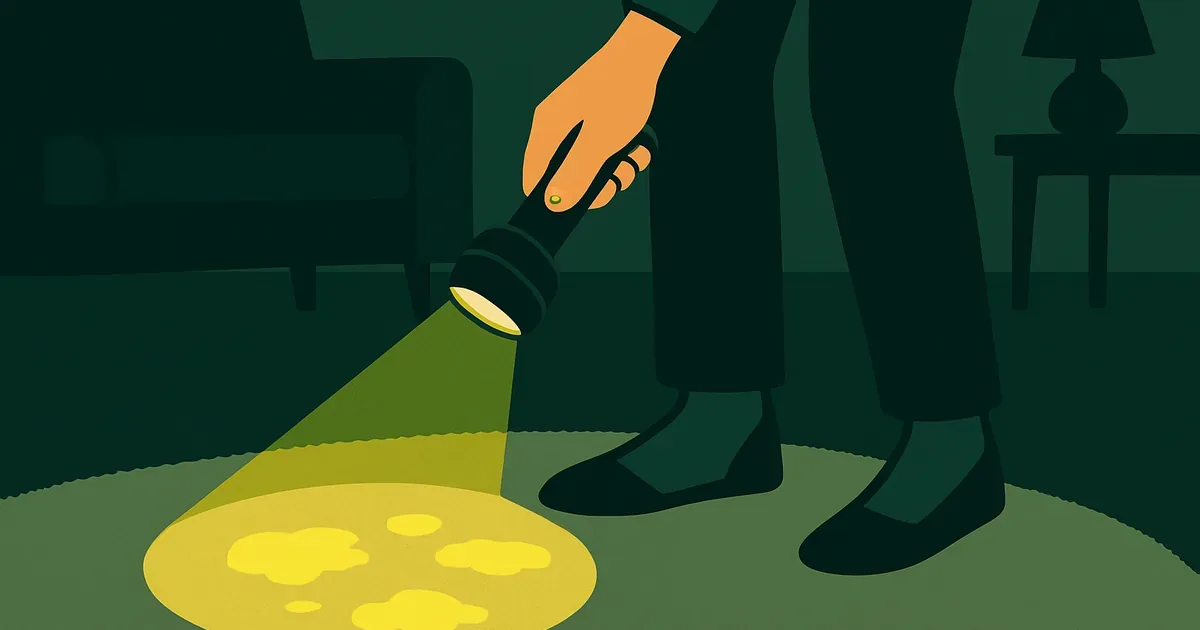
A UV black light flashlight (around $10-15) reveals dried urine stains that are invisible to the naked eye. Sweep every room at night with the lights off to find spots you’ve missed. Old urine stains glow yellow-green under UV light.
Sometimes replacing carpet padding is cheaper and more effective than repeated treatment. If the padding is saturated, no amount of surface cleaning will eliminate the odor permanently.
Prevention Tips
Preventing stains is always easier than removing them.
- Waterproof protectors for mattresses and furniture in pet areas
- Area rugs on hardwood in pet zones (rugs are easier and cheaper to replace than refinishing floors)
- Consistent potty schedule for dogs, especially puppies and seniors
- Vet checkup if accidents increase suddenly (could indicate a urinary tract infection, diabetes, or kidney issue). The ASPCA’s litter box guide covers common behavioral causes for cats.
- Keep enzyme cleaner stocked so you can treat stains the moment they happen
Pet Stain Prevention Checklist
Product Recommendations
If you want to verify product safety before buying, the EPA Safer Choice program certifies cleaners that meet strict safety standards. Look for the Safer Choice label on enzyme cleaner bottles.
These are our top picks based on research across thousands of user reviews. All prices are at time of writing and may change.
| Product | Best For | Price |
|---|---|---|
| Rocco & Roxie Professional Strength | All-around stain and odor removal | ~$19.97 |
| Nature’s Miracle Advanced | Cat urine and everyday messes | ~$12.99 |
| Simple Solution Extreme | Large or multi-pet homes | ~$11.99 |
Rocco & Roxie Professional Strength enzyme cleaner (~$19.97) is our top pick for most pet owners. It handles urine, vomit, feces, and drool on any indoor surface. The broad-spectrum enzyme blend covers protease, lipase, and amylase for maximum versatility.
Nature’s Miracle Advanced enzyme cleaner (~$12.99) is a strong runner-up at a lower price. It works especially well on cat urine thanks to its high protease concentration. It’s also available at nearly every pet store if you need a bottle today.
Simple Solution Extreme pet stain remover (~$11.99) is the best value for homes with multiple pets or frequent accidents. It comes in gallon sizes for cost-effective refills.
For the full breakdown with more options, check our roundup of the top-rated pet stain and odor removers and our picks for enzyme cleaners for pet odors.
Frequently Asked Questions
What removes pet stains and odors best?
Why do pet stains smell worse when it's humid?
Can I use vinegar instead of enzyme cleaner for pet stains?
How do I find old pet stains I can't see?
How long does it take for enzyme cleaner to remove pet odor?
Will pet stains come back after cleaning?
Related Articles
Cleaning Product Researcher
Sarah Chen is a pen name for our lead product researcher. A lifelong dog person who now shares her home with two cats, she's no stranger to enzyme cleaners. She writes the guides and reviews on this site based on product research, ingredient analysis, and real user feedback.