How to Clean Up After a Puppy: A Full Guide
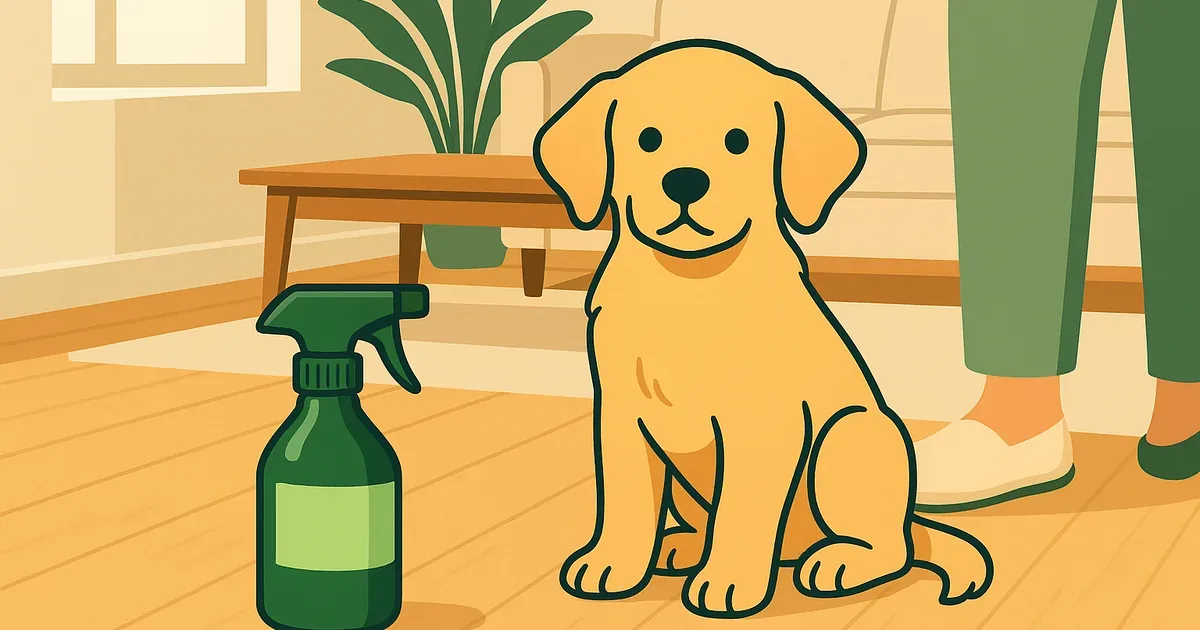
Table of Contents
The key to cleaning up after a puppy is using an enzyme cleaner on every accident, every time. Regular cleaners leave behind scent markers that your puppy’s nose can still detect. That tells them “this is a bathroom spot.” Enzyme cleaners break down urine at the molecular level so the smell is truly gone.
This guide covers a cleanup protocol for each type of mess, a puppy cleaning kit checklist, surface protection tips, and strategies for the full house-training period. If you’re not sure how these products work, start with our guide on how enzyme cleaners work.
Why cleanup matters for house training
Dogs have roughly 300 million olfactory receptors. Humans have about 6 million. The AKC explains how dogs use smell to navigate their environment. Even if you can’t smell old urine after mopping with regular cleaner, your puppy absolutely can.
Repeat accidents in the same spot are often a cleanup failure, not a training failure. Your puppy isn’t being stubborn. They’re following their nose to a spot that still smells like a bathroom to them.
Enzyme cleaners are the only type that fully removes these scent markers. They break down uric acid crystals, which are the compounds that standard cleaners leave behind. No other cleaning product does this.
ℹ️ Same Spot, Same Problem
If your puppy keeps going in the same spot, that area likely still smells like urine to their nose. Re-treat it with enzyme cleaner and cover with plastic wrap for 8-24 hours. The extended contact time lets the enzymes break down uric acid crystals deep in carpet padding or grout lines.
Build your puppy cleaning kit
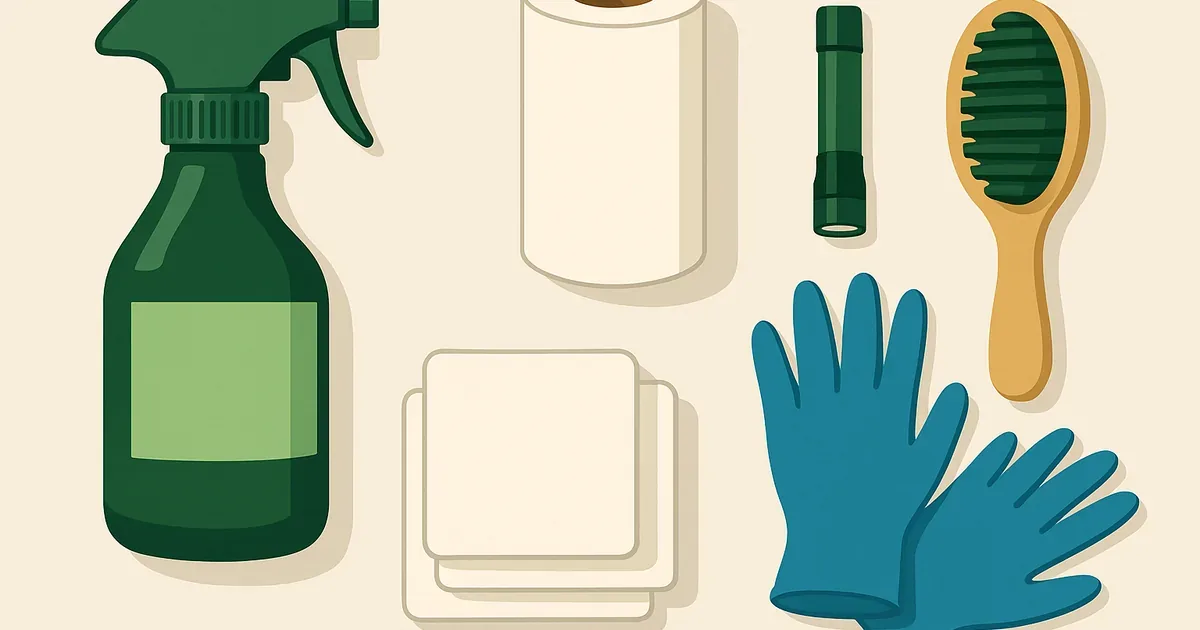
Gather these supplies before you need them. Having everything ready means you can respond to accidents in seconds, which makes a big difference in cleanup success.
- Enzyme cleaner spray (32 oz bottle for daily use)
- Enzyme cleaner concentrate (gallon jug for heavy use)
- Paper towels or microfiber cloths (for blotting)
- UV flashlight / black light (for finding old stains, about $10-15)
- Rubber gloves
- Plastic wrap or damp towels (for covering treated areas)
- Baking soda (for extra odor absorption after enzyme treatment)
- Puppy pads or washable pee pads (for containment)
- Carpet spot cleaner or wet/dry vacuum (optional but helpful)
For product recommendations, check our picks for the best enzyme cleaners for puppy accidents.
💡 Buy in Bulk
Get enzyme cleaner in gallon-size concentrate. You’ll go through more than you expect in the first few months. A 32 oz spray bottle lasts about a week during heavy house training. A gallon concentrate diluted into spray bottles saves money and keeps you stocked.
How to clean each type of puppy mess
Urine accidents
-
Blot immediately. Press paper towels or a cloth into the wet spot. Stand on it to absorb as much liquid as possible. Don’t rub or scrub. Rubbing pushes urine deeper into carpet fibers.
-
Spray enzyme cleaner. Saturate the area fully. The cleaner needs to reach the same depth the urine did. On carpet, that means soaking through to the padding.
-
Let it sit. Cover with a damp cloth for 15-30 minutes on fresh stains, or 8+ hours on repeat spots. Enzymes need moisture and time to work.
-
Blot and air dry. Press clean cloths into the area to absorb the enzyme cleaner. Let it air dry completely. Don’t use heat to speed up drying.
Poop accidents
-
Pick up solids. Use paper towels or a plastic bag turned inside out over your hand. Remove as much solid material as you can.
-
Clean residue. Wipe the area with a damp cloth to remove any remaining material.
-
Apply enzyme cleaner. Spray and let it sit for 15-20 minutes. Even though you’ve removed the visible mess, organic residue is still in the fibers.
-
Blot dry. Press clean cloths into the area and let it air dry.
Vomit
-
Scoop up solids. Use a spatula or stiff piece of cardboard to lift the bulk of it. Paper towels work too, but a flat edge picks up more in one pass.
-
Blot excess moisture. Press clean cloths into the area.
-
Apply enzyme cleaner. Vomit contains stomach acid and bile, which need protease and lipase enzymes to break down fully. Saturate the area and let the cleaner sit for 20-30 minutes.
-
Blot dry. Let the area air dry completely before allowing your puppy back on it.
For more on handling vomit stains, see our guide on best pet stain and odor removers.
Surface-by-surface cleanup guide
Carpet
Carpet is the toughest surface to clean because urine soaks through the fibers into the padding below. Your enzyme cleaner needs to reach that padding to be effective.
Key tips for carpet:
- Saturate heavily so the product reaches the pad, not just the surface fibers
- Treat a larger area than the visible stain since urine spreads outward underneath
- Cover with plastic wrap for any stain older than a day to keep enzymes active
- Use a wet/dry vacuum after treatment to extract dissolved residue from deep in the padding
If carpet still smells after three enzyme treatments, the urine may have reached the subfloor. At that point, you may need to replace the carpet pad in that section.
For more carpet-specific advice, check our roundup of best enzyme cleaners for dog urine.
Hardwood and tile
The good news: hard floors are easier to clean than carpet. Wipe up urine immediately to prevent moisture damage to wood. Spray enzyme cleaner, let it sit for 10 minutes, and wipe clean.
Watch out for grout lines on tile floors. Grout is porous and absorbs urine like a sponge. Scrub enzyme cleaner into grout with a stiff brush and give it extra contact time (30-60 minutes) to break down uric acid trapped in the pores. For more on this, see our guide on enzyme cleaner for tile and grout.
Upholstery and furniture
Puppies love couches. Couches don’t love puppy accidents.
- Blot first, don’t rub. Rubbing spreads the stain.
- Spray enzyme cleaner on the fabric surface in an even coat.
- For cushions with removable covers, treat both the cover and the foam inside. The foam holds odors even after the cover looks clean.
Protecting surfaces during house training
Prevention saves you cleanup time. Set up your home to minimize damage during the training period:
- Use washable pee pads in high-traffic puppy zones (near doors, in their play area)
- Place waterproof protectors under dog beds and on furniture your puppy uses
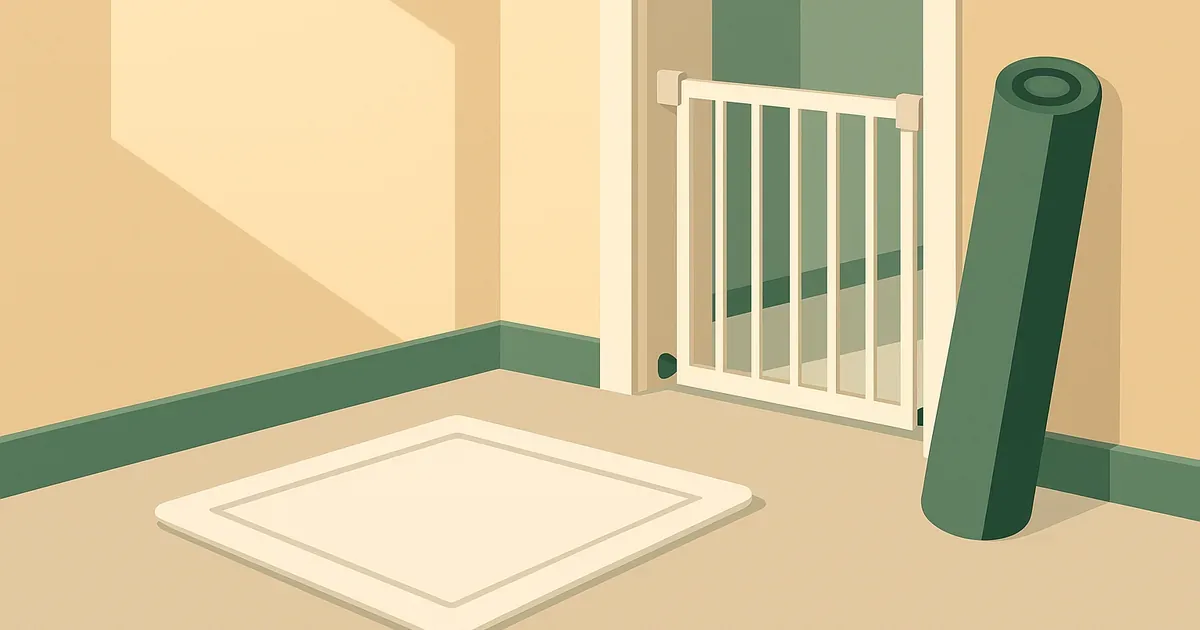
- Roll up area rugs in rooms your puppy uses during training (store them until training is solid)
- Set up baby gates to limit access to carpeted rooms until your puppy is reliable
- Use a crate when you can’t supervise directly (crate training reduces unsupervised accidents)
⚠️ Don't Punish Accidents
Never punish your puppy for accidents. Clean up calmly with enzyme cleaner and redirect them to the correct spot. Punishment doesn’t speed up house training. It makes your puppy afraid to go in front of you, which leads to them hiding accidents in corners and behind furniture where you won’t find them quickly.
Finding hidden stains with a black light
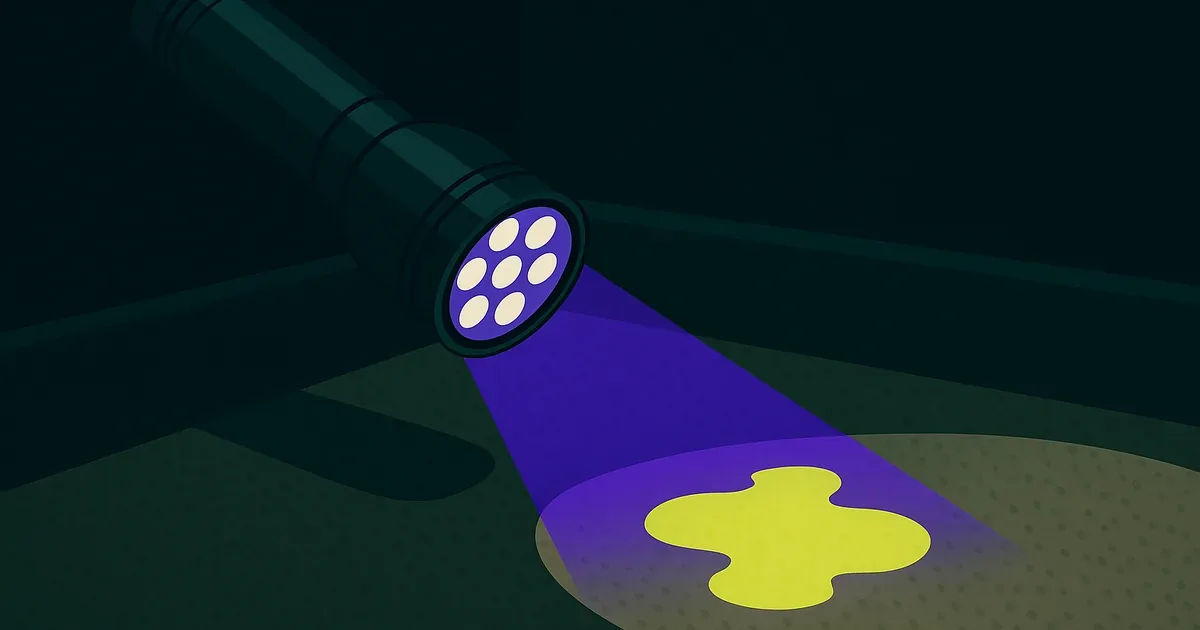
A UV black light (about $10-15 at any hardware store) reveals dried urine stains that are invisible under normal lighting. This is one of the most useful tools during house training.
Here’s how to use it:
- Darken the room as much as possible (close blinds, turn off lights)
- Scan floors, baseboards, and furniture legs slowly with the UV light
- Old urine stains glow yellow-green under UV light
- Mark each spot with painter’s tape so you can find them with the lights on
- Treat every spot with enzyme cleaner, even small ones
You’ll likely find stains you didn’t know about. That’s normal. Treat them all. Every untreated spot is a signal to your puppy’s nose that says “go here.”
For more on enzyme cleaning for pet odors specifically, see our guide on enzyme cleaners for pet odors.
When to call it a bigger problem
Sometimes accidents aren’t a training issue. Talk to your vet if:
- Accidents continue past 6 months of consistent training
- Your puppy was previously trained and starts having accidents again
- You notice frequent urination, straining, or blood in the urine
- Diarrhea persists for more than 24 hours
Medical causes like urinary tract infections, kidney issues, or digestive problems can look like training failures. Behavioral causes like anxiety or territorial marking (which is different from house training) also need different approaches. The ASPCA’s general pet care guide covers when to consult your vet about behavioral and medical concerns.
If you’ve been using enzyme cleaner consistently and stains keep appearing in the same spot, the carpet pad may need replacing. Urine that has soaked through to the subfloor won’t come out with surface treatment alone.
💡 The First Year Game Plan
Months 1-3: Accidents are frequent and normal. Keep enzyme cleaner in every room. Clean immediately. Months 3-6: Accidents should decrease. Use a UV light weekly to find and treat any missed spots. Months 6-12: Most puppies are reliable by now. Keep enzyme cleaner on hand for occasional setbacks. After 12 months: If accidents continue, consult your vet.
Wrapping up
House training is a cleanup game as much as it is a training game. Every accident you clean properly with an enzyme cleaner is a step toward a fully trained puppy. Every accident you clean with regular cleaner is a scent marker that invites a repeat.
Build your cleaning kit before you need it. Respond to every accident quickly. Use enzyme cleaner every time. And give yourself some grace. Every puppy owner goes through this phase. It doesn’t last forever.
For product picks sorted by puppy-specific needs, check our full roundup of best enzyme cleaners for puppy accidents. And for safety details on using these products around your new pet, read our guide on enzyme cleaner safety for pets and kids.
Frequently Asked Questions
How often should I clean up puppy accidents with enzyme cleaner?
Can I use vinegar instead of enzyme cleaner for puppy messes?
How long does puppy house training usually take?
Do I need a black light to find old puppy stains?
What's the best enzyme cleaner for a new puppy owner?
Should I steam clean carpet after puppy accidents?
Cleaning Product Researcher
Sarah Chen is a pen name for our lead product researcher. A lifelong dog person who now shares her home with two cats, she's no stranger to enzyme cleaners. She writes the guides and reviews on this site based on product research, ingredient analysis, and real user feedback.