Enzyme Cleaner for Litter Box Odor (Easy Method)
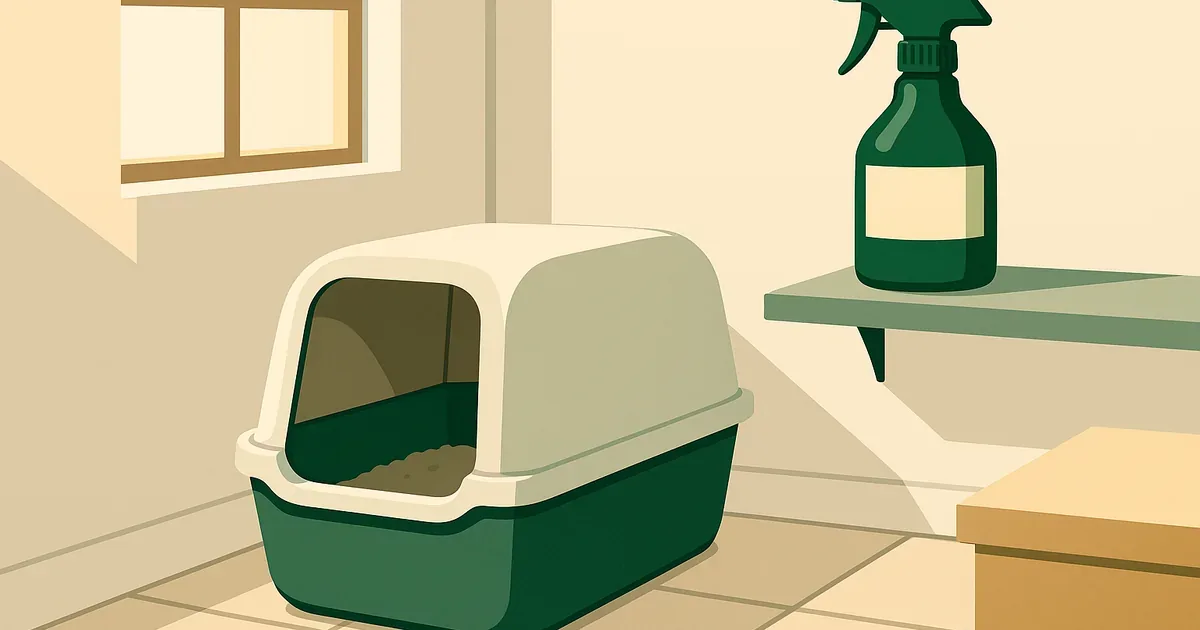
Table of Contents
Spraying an enzyme cleaner on your litter box once a week stops odor buildup before it starts. Cat urine contains concentrated uric acid that regular soap and water can’t break down. Enzyme cleaners digest those uric acid crystals, keeping the box odor-neutral between full litter changes. This takes about 10 minutes a week and makes a noticeable difference within the first cleaning.
Here’s the full weekly protocol, a daily maintenance method, product picks, and placement tips to keep your litter box from stinking up the house.
Affiliate Disclosure: This page contains affiliate links. When you purchase through our links, we may earn a commission at no additional cost to you. Full disclosure.
Why Litter Boxes Smell (Even When You Scoop Daily)
Cat urine has the highest concentration of uric acid among common pets. Every time your cat uses the box, uric acid crystals bond to the plastic walls and floor. Scooping removes the clumps, but it leaves microscopic uric acid residue behind.
Over weeks and months, these crystals build up on the plastic surface. That’s why your litter box can smell bad even right after you add fresh litter. The litter sits on top, but the crystals underneath keep releasing odor.
Regular soap and water can’t dissolve uric acid. Only enzymes can break that bond. If you want to understand the science behind this, read about how enzyme cleaners break down uric acid.
ℹ️ It's Not the Litter
If your litter box smells bad even with fresh litter, the problem isn’t the litter. It’s uric acid crystals embedded in the plastic. An enzyme cleaner is the only way to remove them.
Weekly Deep Clean Protocol
This seven-step process takes about 10 minutes and should be done once a week.
- 1. Empty the box. Dump all litter into a trash bag.
- 2. Rinse with warm water. Not hot. Hot water sets uric acid proteins and makes them harder to remove.
- 3. Spray enzyme cleaner generously. Cover the entire interior: bottom, sides, and rim.
- 4. Let it sit for 15-30 minutes. This gives the enzymes time to break down the uric acid crystals on the plastic.
- 5. Scrub lightly with a brush. Use a dedicated litter box brush. Don’t use your kitchen sponge.
- 6. Rinse and dry. Air dry or towel dry before adding fresh litter.
- 7. Add fresh litter. Fill to 2-3 inches deep for clumping litter.
💡 Set a Reminder
Set a weekly reminder on your phone for litter box deep cleaning day. Most cat owners notice a significant odor improvement after the first enzyme deep clean and wonder why they didn’t start sooner.
Weekly Litter Box Deep Clean
Empty all litter
Dump all litter into a trash bag.
Rinse with warm water
Rinse the box in the tub or outdoors with warm water.
Spray enzyme cleaner
Cover the entire interior: bottom, sides, and rim.
Let sit 15-30 minutes
Gives enzymes time to break down uric acid on the plastic.
Scrub with a brush
Use a dedicated litter box brush. Not your kitchen sponge.
Rinse and dry
Air dry or towel dry before adding fresh litter.
Add fresh litter
Fill to 2-3 inches deep for clumping litter.
Daily Maintenance Between Changes
You don’t need a full deep clean every day. A quick spray after scooping extends the time between full litter changes by 2-3 days.
- Spray enzyme cleaner lightly on the litter surface after scooping
- Focus on wet spots and the edges where urine hits the box wall
- Don’t saturate the litter. A light mist on problem areas is enough.
- The enzymes work between the litter granules to break down residual uric acid
This daily spray habit takes about 30 seconds and keeps uric acid from accumulating on the plastic between weekly deep cleans.
Litter Box Placement and Setup Tips
Where and how you set up the litter box affects odor as much as cleaning does.
- Ventilation matters. Keep the box in a well-ventilated area, not a closed closet. Airflow helps odors dissipate instead of concentrating.
- One box per cat, plus one extra. This is the “n+1 rule” recommended by veterinary behaviorists. Fewer boxes means more concentrated use and faster odor buildup.
- Covered vs uncovered. Covered boxes trap odor inside and can discourage use. Open boxes ventilate better and are easier to maintain.
- Replace plastic boxes every 6-12 months. Scratches in the plastic harbor uric acid crystals even after enzyme cleaning. Old boxes absorb odor permanently.
- Use a litter mat. A mat outside the box catches tracked litter and can be sprayed with enzyme cleaner too.
Best Enzyme Cleaners for Litter Box Maintenance
These are the same products we recommend for cat urine cleanup, used here in a preventive maintenance role. All prices are at time of writing and may change.
Nature’s Miracle Advanced (Our Top Pick for Litter Boxes)
Nature’s Miracle Advanced enzyme cleaner (~$12.99) has high protease and uricase enzyme concentrations designed for cat-specific uric acid. The scent is light enough that most cats tolerate it near the litter box without fuss.
It’s our top pick for weekly litter box maintenance because of the cat-friendly scent level and strong performance on uric acid. It’s also the easiest to find at local stores if you run out.
For more cat-specific options, see our roundup of the best enzyme cleaners for cat urine.
Rocco & Roxie Professional Strength (Best for Deep Cleaning Old Boxes)
Rocco & Roxie Professional Strength enzyme cleaner (~$19.97) is the strongest formula we recommend. If you have an older litter box with built-up uric acid that lighter products haven’t fully resolved, this one has the enzyme concentration to handle heavy restoration.
It’s more product than most cat owners need for routine maintenance. But for a badly stained box that needs a fresh start, it’s the right tool.
Biokleen Bac-Out (Natural/Plant-Based Option)
Biokleen Bac-Out enzyme cleaner (~$13.49) uses live enzyme cultures and natural citrus extracts. Some cat owners prefer the plant-based formula, and its light scent works well for daily maintenance spraying.
⚠️ Watch the Fragrance
Avoid enzyme cleaners with strong fragrances for litter box use. Cats have sensitive noses and may avoid the box if it smells too perfumed. Stick with unscented or lightly scented formulas. Check product labels before buying.
For broader pet odor solutions, see our picks for enzyme cleaners for pet odors. If your cat is also spraying on walls or furniture, see our guide on enzyme cleaners for cat spray.
ℹ️ Why Uric Acid Is So Stubborn
Uric acid forms crystals that bond tightly to surfaces. Unlike urea (which dissolves in water), uric acid crystals resist soap, vinegar, and most household cleaners. Only uricase enzymes can break the chemical bonds holding these crystals together. The PubChem entry on uric acid explains the chemical structure that makes it so persistent.
When to Replace the Litter Box Entirely
Enzyme cleaning extends the life of a litter box, but every plastic box has a limit. Replace yours when:
- Deep scratches trap uric acid despite weekly enzyme cleaning
- Visible staining won’t come out after 2-3 deep cleans
- The plastic is warped or cracked, creating crevices where crystals hide
- The box is older than 12 months with heavy daily use
Stainless steel litter boxes cost more upfront but resist uric acid buildup much better than plastic. They last for years and don’t develop the microscopic scratches that trap odor compounds. If you’re tired of replacing plastic boxes, stainless steel is worth considering.
If your cat is avoiding the litter box entirely, the odor from embedded uric acid could be the cause. Read about why your cat is peeing outside the litter box for more on behavioral causes and solutions. The ASPCA’s litter box problems guide is a good behavioral resource for persistent avoidance issues.
For urine stains on carpet or floors near the litter box area, check our guides on removing urine stains with enzyme cleaner and enzyme floor cleaners. You can also browse our full top pet stain and odor removers list.
The ASPCA Animal Poison Control Center can answer questions about specific cleaning product ingredients if you’re concerned about safety around your cats. Products with the EPA Safer Choice label meet stricter safety standards.
Frequently Asked Questions
How often should I enzyme-clean my litter box?
Can I spray enzyme cleaner directly on cat litter?
Will the enzyme cleaner smell bother my cat?
Why does my litter box smell even right after I change the litter?
Should I use a covered or uncovered litter box for odor control?
Cleaning Product Researcher
Sarah Chen is a pen name for our lead product researcher. A lifelong dog person who now shares her home with two cats, she's no stranger to enzyme cleaners. She writes the guides and reviews on this site based on product research, ingredient analysis, and real user feedback.