Enzyme Cleaner for Outdoor Use: Patio, Deck, and Turf
Table of Contents
Enzyme cleaners work well on outdoor surfaces like artificial turf, concrete patios, and wood decks. The key difference from indoor use is timing: apply in the early morning or evening to avoid UV degradation. Sunlight breaks down enzymes quickly, so you need to give them at least a few hours to work before direct sun hits the treated area.
For artificial turf especially, regular enzyme treatment is the only reliable way to control pet urine odor in warm weather. Hosing the turf down dilutes the urine but doesn’t break down the uric acid crystals trapped in the infill material.
Affiliate Disclosure: This page contains affiliate links. When you purchase through our links, we may earn a commission at no additional cost to you. Full disclosure.
Why Outdoor Pet Odor Is Different
Outdoor surfaces don’t get the regular cleaning that indoor floors do. Urine soaks into porous materials like concrete, wood, and the infill layer in artificial turf. Over time, the buildup gets worse.
Heat and sun make the problem worse by volatilizing uric acid compounds. That’s why a patio or turf area can smell fine on cool mornings but reek in afternoon heat. Rain temporarily reduces the odor, but it also reactivates dried uric acid crystals, making the smell come back once the surface dries.
Regular hosing dilutes surface residue but can’t break down the uric acid itself. For that, you need enzymes. Learn more about how enzyme cleaners break down uric acid.
ℹ️ Why It Smells Worse on Hot Days
If your patio or artificial turf smells worse on hot days, it’s because heat volatilizes uric acid compounds that have soaked into the surface. Hosing it down helps temporarily but doesn’t fix the root cause. Enzyme cleaners break down the uric acid itself.
The UV Problem (and How to Solve It)
This is the most overlooked factor in outdoor enzyme cleaning. Enzymes are proteins, and UV radiation from sunlight breaks down proteins. Applying enzyme cleaner at noon in full sun reduces its effectiveness significantly.
The solution is simple: apply at the right time of day.
- Best time: Evening. The enzymes get a full night (8-10 hours) to work without UV interference.
- Second best: Early morning, before direct sun hits the area.
- Also fine: Overcast days, when UV exposure is reduced.
- Minimum dwell time before sun exposure: 2-4 hours. For more on dwell times, see our guide on how long enzyme cleaners take to work.
Most enzyme cleaners sold for indoor use don’t include UV stabilizers. A few outdoor-specific products do, but they’re harder to find and more expensive. Adjusting your application timing is the easiest and cheapest fix.
💡 Apply at Night
Treat outdoor areas in the evening and let the enzymes work overnight. By morning, they’ve had 8-10 hours to break down organic matter without UV interference. This simple timing change makes a big difference in results.
Surface-by-Surface Guide
Artificial Turf
This is the biggest outdoor use case for enzyme cleaners, especially for dog owners who’ve installed synthetic grass as a pet yard.
Urine seeps through turf fibers into the infill material (rubber crumb or sand). The uric acid crystals bond to the infill and release odor, especially in heat. Hosing washes away surface residue but can’t reach the crystals in the infill.
Here’s how to treat it:
- Apply enzyme cleaner directly to the turf surface and let it soak into the infill
- For large areas, use a hose-end sprayer with diluted enzyme concentrate
- After enzyme treatment, rinse lightly with a hose to wash residue into the infill
- Frequency: every 1-2 weeks during warm months, monthly during cool months
For dog urine specifically, see our picks for the best enzyme cleaners for dog urine.
Concrete Patio and Walkways
Concrete is porous and absorbs urine, which makes it a common problem surface for dog owners.
- Apply enzyme cleaner and scrub with a stiff brush to work it into the pores
- Let it sit for 2-4 hours (out of direct sunlight)
- For large patios, dilute concentrate in a pump sprayer or hose-end sprayer
- Sealed concrete responds faster than unsealed
- Heavy buildup on unsealed concrete may need 2-3 treatments spaced a few days apart
For more details on concrete treatment, read our guide on using an enzyme cleaner for concrete.
Wood Deck
Use enzyme cleaner on sealed or stained wood decks only. Unsealed wood absorbs liquid and can swell or discolor.
- Test a hidden spot first to check for finish damage
- Spray enzyme cleaner, let it sit 30-60 minutes, then rinse
- Don’t let enzyme cleaner pool on the surface
- Reapply deck sealant annually in areas where your pets spend time
ℹ️ Sealed vs. Unsealed Surfaces
Sealed surfaces (stained decks, sealed concrete, coated pavers) respond faster to enzyme treatment because the urine sits on or near the surface. Unsealed surfaces absorb urine deeper, which means longer soak times and more repeat treatments. The Natural Stone Institute recommends sealing natural stone to protect against staining and odor absorption.
Stone Pavers and Flagstone
Enzyme cleaner works well on natural stone. The tricky part is the joints between pavers.
- Apply to both the stone surface and the gaps between pavers
- Urine collects in the sand or polymeric sand between pavers
- Brush enzyme cleaner into the joints with a stiff broom
- Let it sit for 2-4 hours, then rinse
What about skunk spray?
Skunk is the one outdoor odor that does not behave like the rest. The smell comes from thiols, which are sulfur compounds rather than the proteins and uric acid enzymes are built to digest. A general enzyme cleaner will help with what the dog tracked onto the deck, but it is not the right tool for the spray itself, and it should not be the only thing you use. See enzyme cleaner for skunk smell for what actually works on thiols and when to reach for something else.
Dilution and Hose Sprayer Method
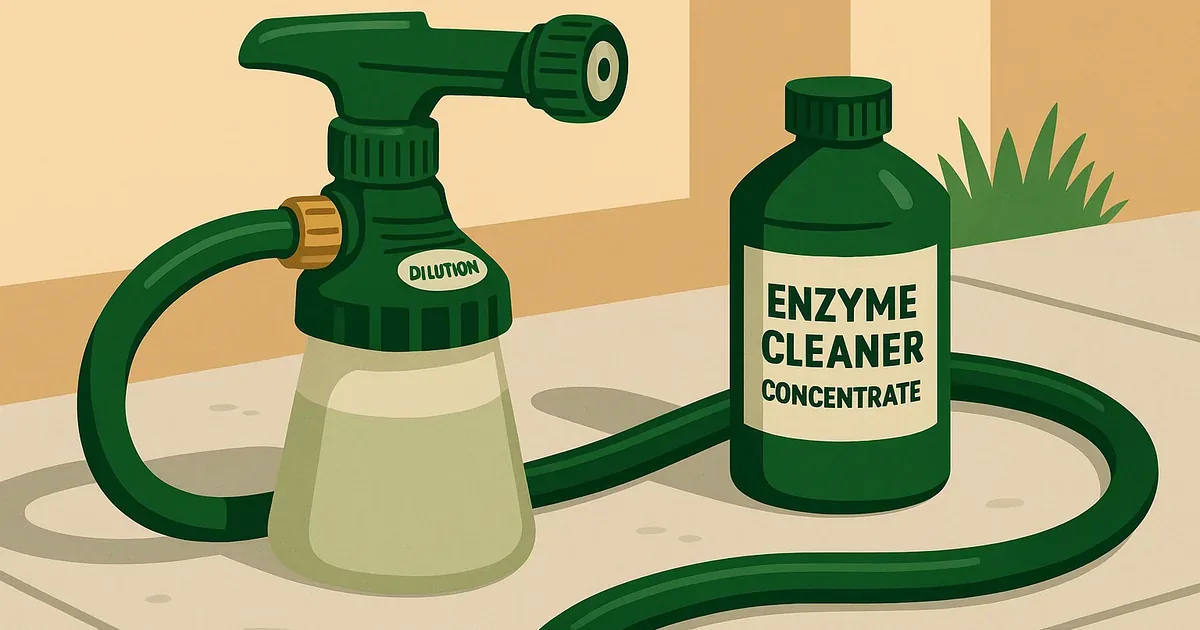
Most enzyme cleaners sell as ready-to-use spray bottles. That works fine indoors, but it’s not practical for large outdoor areas. A 32 oz bottle won’t cover a 500-square-foot patio. You need concentrate and a sprayer.
Hose-end sprayer setup:
- 1. Buy enzyme cleaner in concentrate form (gallon size for best value)
- 2. Fill the sprayer reservoir with concentrated enzyme cleaner
- 3. Set the dilution dial to the ratio listed on the product label (typically 1:10 or 1:20)
- 4. Spray the entire area evenly, working in sections
A pump sprayer (2-5 gallon capacity) is a good alternative for smaller areas like a section of patio or a dog run.
⚠️ Check the Dilution Ratio
Check the enzyme cleaner label for dilution ratios before using a hose-end sprayer. Over-diluting reduces effectiveness. Under-diluting wastes product and can leave sticky residue. Follow the manufacturer’s recommendation.
Seasonal Cleaning Schedule
Outdoor enzyme cleaning needs change with the seasons. Here’s a general schedule:
| Season | Frequency | Notes |
|---|---|---|
| Spring | 2-3 treatments in the first month | Deep clean after winter buildup |
| Summer | Every 1-2 weeks | Heat amplifies odors; enzymes work faster in warmth |
| Fall | Every 2-3 weeks | Falling leaves trap moisture and create odor pockets |
| Winter (mild) | Monthly | Cold slows enzyme activity; increase dwell time |
| Winter (freezing) | Pause | Enzymes need above-freezing temps to work; resume in spring |
If you have multiple dogs, increase frequency by one level (for example, weekly instead of every 2 weeks in summer).
Outdoor Enzyme Cleaning Seasonal Schedule
Spring
- • 2-3 treatments in the first month
- • Deep clean after winter buildup
Summer
- • Every 1-2 weeks
- • Heat amplifies odors but enzymes work faster
Fall
- • Every 2-3 weeks
- • Clear fallen leaves that trap moisture and odor
Winter (mild)
- • Monthly treatment
- • Increase dwell time (cold slows enzymes)
Winter (freezing)
- • Pause treatments
- • Enzymes need above-freezing temps; resume in spring
Product Picks for Outdoor Use
Not every enzyme cleaner is practical for outdoor use. You need concentrate formulas for cost-effective coverage of large areas. All prices are at time of writing and may change.
Simple Solution Extreme (Best Value for Large Areas)
Simple Solution Extreme pet stain remover (~$11.99) is available in gallon size and works well diluted in a hose-end sprayer. For large turf areas, patios, and driveways, the cost per square foot is the lowest of any enzyme cleaner we recommend.
Rocco & Roxie Professional Strength (Strongest Formula)
Rocco & Roxie Professional Strength enzyme cleaner (~$19.97) has the highest enzyme concentration for heavy buildup on turf or concrete. If you’ve gone months without enzyme treatment and the odor is severe, this is the formula to start with.
Nature’s Miracle Advanced (Good All-Rounder)
Nature’s Miracle Advanced enzyme cleaner (~$12.99) is widely available and delivers consistent enzyme quality. A solid middle-ground option for regular outdoor maintenance.
For more product options, check our roundup of top pet stain and odor removers and our picks for enzyme cleaners for pet odors. If you’re also dealing with indoor messes, see our guides on enzyme floor cleaners and removing pet urine smell from carpet.
The EPA Safer Choice program certifies cleaning products that are safer for the environment. For outdoor use, this matters since runoff can affect soil and nearby plants. The PubChem uric acid compound page explains the chemical structure that makes uric acid so resistant to water and hosing alone.
Frequently Asked Questions
Do enzyme cleaners work on artificial turf?
Can I put enzyme cleaner in a hose-end sprayer?
Does sunlight affect enzyme cleaner?
How do I remove dog urine smell from a concrete patio?
How often should I enzyme-clean my artificial turf?
Can I use enzyme cleaner on a wood deck?
Related Articles
Enzyme Cleaner for Skunk Smell: What Works (2026)
Tomato juice won't fix skunk spray. Learn how enzyme cleaners break down thiol compounds to get the smell off your dog, clothes, and home. Try this first.
How to Remove Pet Urine from Concrete with Enzymes
How to remove pet urine from concrete floors. Covers sealed vs unsealed concrete, the pour-on-and-cover method, and garage tips. Follow our method.
Cleaning Product Researcher
Sarah Chen is a pen name for our lead product researcher. A lifelong dog person who now shares her home with two cats, she's no stranger to enzyme cleaners. She writes the guides and reviews on this site based on product research, ingredient analysis, and real user feedback.