Do Enzyme Cleaners Work on Set-In Stains? Honest Answer
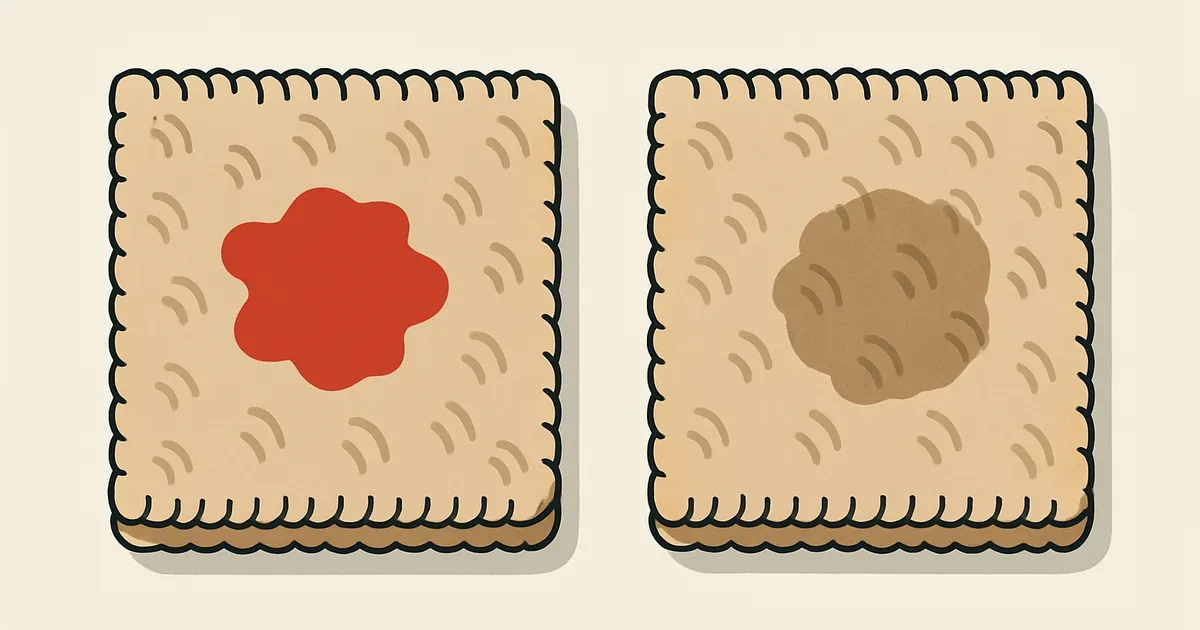
Table of Contents
Yes, but with a caveat. Enzyme cleaners can improve set-in stains, especially organic ones like pet urine, food, and blood. But old stains have chemically changed through a process called oxidation, which makes them harder to break down. You’ll need longer contact time, a stronger concentration, and repeat applications. Some very old stains may not come out completely.
That’s the honest answer. Most content either oversells enzyme cleaners as a cure-all or ignores old stains entirely. We’ll give you a realistic picture of what to expect, which stain types respond best, and when it’s time to call in a professional.
Why old stains are harder to remove
Fresh stains sit on the surface and contain intact proteins, fats, or starches that enzymes target easily. They haven’t had time to bond deeply with fibers. A quick application of enzyme cleaner usually handles them in 15-30 minutes.
Old stains are a different situation. Over time, stains undergo oxidation, a chemical reaction that changes the molecular structure of the stain compounds. The molecules cross-link with fabric fibers and bond more tightly to the surface.
Heat exposure makes this worse. Every trip through a hot dryer, every afternoon of sunlight, and every round of hot water washing drives the oxidation process forward. That’s why a stain that went through the dryer multiple times is much harder to remove than one that air-dried.
ℹ️ The Oxidation Problem
Oxidation is a chemical reaction where stain molecules react with oxygen and change their structure. The new compounds bond more tightly to fibers and resist breakdown. This is the same basic chemistry that turns a cut apple brown. The longer a stain sits, the more oxidation occurs, and the harder the stain becomes to remove.
The stain you see on an old spot might also include secondary discoloration from the original substance breaking down over time. This is common with pet stains, where the original urine has decomposed but left behind new compounds that cause yellowing.
For background on how enzymes break down stains at the molecular level, see our guide on how enzyme cleaners work.
How to adjust your approach for old stains
The same enzyme cleaner that handles a fresh stain in 15 minutes needs a different approach for set-in stains. Here’s what to change.
Longer contact time
Fresh stains respond in 15-30 minutes. Old stains may need 12-24 hours. That’s a big difference, and it’s the most common adjustment people miss.
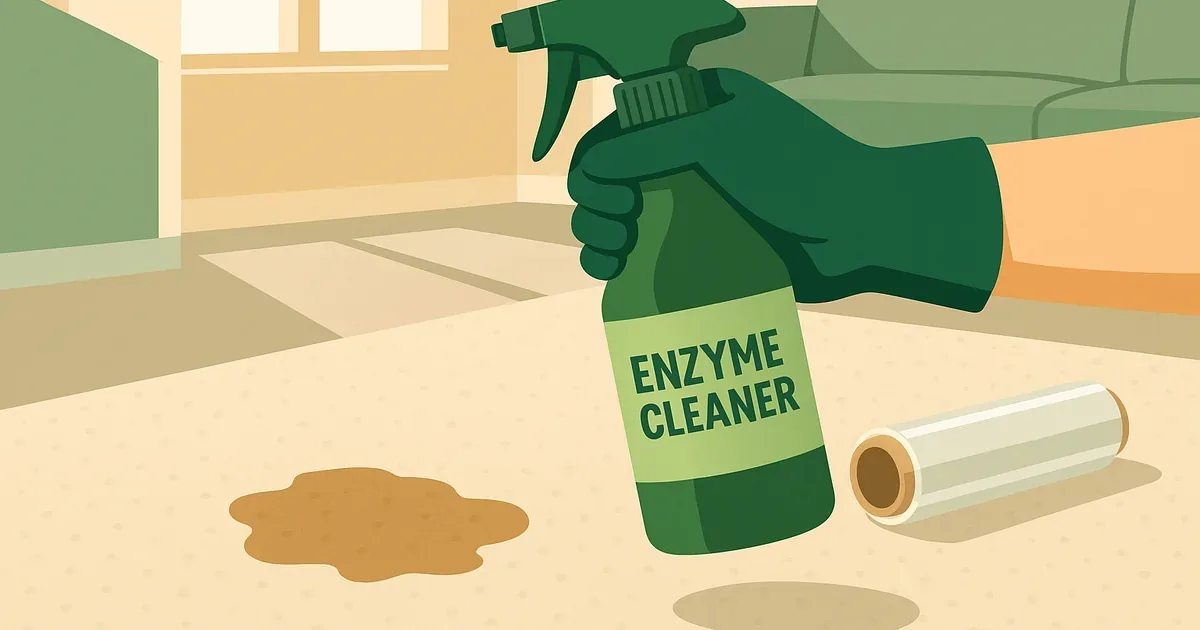
- Cover the treated area with plastic wrap to keep the enzyme solution moist
- Enzymes stop working once they dry out, so moisture is critical for set-in stains
- Check periodically but don’t expect visible results in the first hour or two
- For carpet stains, the full process is covered in our guide on how to use enzyme cleaner on carpet
Higher concentration
Diluted enzyme cleaner works fine on fresh messes. For set-in stains, you need more enzyme activity per square inch.
- Use the product at full strength rather than diluted
- For concentrate products, use the maximum recommended ratio on the label
- Some people apply, let it work, blot, then apply again fresh for a double treatment
Repeat applications
Old stains often need 2-4 treatments to see significant improvement. Each application breaks down another layer of the stain.
- Let the area dry completely between applications so you can assess progress
- If you see improvement after each round, keep going
- Each treatment reaches deeper oxidized compounds that the previous round exposed
- Be patient. This is a process, not a quick fix.
💡 Track Your Progress
Take a photo of the stain before each enzyme treatment under the same lighting. It’s hard to tell if a stain is fading when you’re looking at it every day. Comparing photos side by side makes improvement much more obvious and helps you decide whether another treatment is worth doing.
For details on treatment timing, see our article on how long enzyme cleaners take to work.
Which set-in stains respond best to enzyme cleaners
Not all old stains respond equally. The type of stain matters as much as the age.
| Stain Type | Enzyme Response | Key Notes |
|---|---|---|
| Pet urine (old) | Good | Uric acid crystals remain even when dry. Most common enzyme cleaner success story. |
| Blood (dried) | Good | Protease enzymes target blood proteins effectively. Always use cold water. |
| Food grease (old) | Moderate-Good | Lipase enzymes break down fats. Old grease stains respond reasonably well. |
| Sweat stains (yellowed) | Moderate | Protease enzymes work on proteins. Yellow discoloration may fade but not disappear if heat-set. |
| Pet vomit or feces (old) | Moderate | Enzymes handle organic compounds well. Surface discoloration may remain. |
| Wine or ink (old) | Poor | These are dye-based stains. Enzymes target organic compounds, not dyes. |
| Rust or minerals | None | Inorganic stains are outside enzyme cleaner territory entirely. |
Pet urine is the standout performer here. Even stains that are months old respond because uric acid crystals persist in the fabric or carpet padding long after the liquid has dried. You can read more about uric acid’s chemical structure on PubChem if you want the science behind why it’s so persistent. For a detailed walkthrough, see our guide on removing urine stains with enzyme cleaners.
When enzyme cleaners won’t be enough
Being honest about limitations builds trust and saves you time. Here are the situations where enzyme cleaners can’t fully do the job.
- Stains that have been through a hot dryer multiple times. Heat sets protein stains permanently by accelerating oxidation and cross-linking the stain molecules with fibers.
- Dye-based stains (wine, ink, synthetic dyes). Enzymes target organic compounds, not dye molecules. You need a different approach for these.
- Rust or mineral stains. These are inorganic. Enzyme cleaners have no effect on them. An oxalic acid-based rust remover is the right tool.
- Stains older than a year that have been repeatedly heated. The chemical changes may be too far gone for enzymes to reverse.
- Bleach damage or color loss. No cleaner can restore color that has been removed by bleach. That’s a permanent change to the fabric or surface.
⚠️ Heat Is the Enemy
If you have an old stain you haven’t treated yet, do not put the item in a hot dryer or use hot water on it. Heat accelerates the oxidation that makes stains permanent. Air dry until you’ve had a chance to treat the stain with enzyme cleaner. This one step can make the difference between a stain that comes out and one that doesn’t.
For carpet stains specifically, our list of the best enzyme carpet cleaners includes products that work well on both fresh and older stains. The Carpet and Rug Institute also offers carpet care guidance that complements enzyme treatment.
When to call a professional
Sometimes the right answer is to bring in someone with stronger equipment and concentrated products.
Consider calling a professional cleaner if:
- You’ve done 3-4 enzyme treatments with no visible improvement
- The stain covers a large area on expensive carpet or upholstery
- The stain involves both organic matter and dye transfer (like red wine on white carpet)
- You’re dealing with antique or delicate fabrics where DIY treatment risks damage
Professional cleaners have access to higher-concentration enzyme solutions and hot water extraction equipment that pulls dissolved residue from deep in carpet padding. They can also assess whether the stain has penetrated into the subfloor, which no consumer product can fix from the surface. The IICRC certifies cleaning professionals, so look for that credential when hiring.
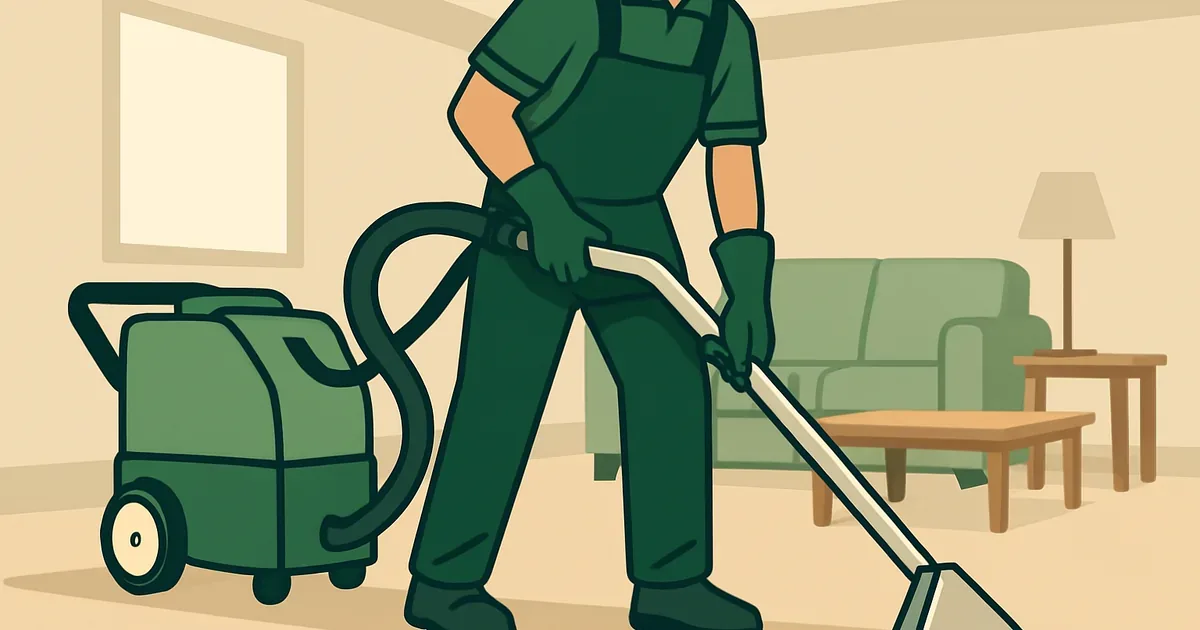
A professional cleaning for stain removal typically runs $150-400 depending on the area size and surface type (at time of writing). That’s a reasonable investment for expensive carpet or upholstery where the alternative is replacement.
For persistent pet stains on carpet, our guide on removing pet stains from carpet covers when DIY treatment is enough and when professional help makes sense.
Wrapping up
Enzyme cleaners can improve set-in stains, but they work best when you adjust your expectations and your technique. Give them more time, use them at full strength, and plan on repeat applications. Track your progress between treatments.
The type of stain matters too. Old pet urine, dried blood, and food grease respond well to enzyme treatment. Dye-based stains, rust, and heat-set damage are outside what enzymes can fix.
If you’re not seeing improvement after 3-4 treatments with proper technique, that’s your signal to call a professional rather than buying more product. An honest assessment saves you time and money.
Frequently Asked Questions
Can enzyme cleaner remove a pet stain that's been there for months?
Should I use hot or cold water with enzyme cleaner on old stains?
Why did the stain come back after I cleaned it?
Do enzyme cleaners work on stains that have already been treated with other cleaners?
How many times should I reapply enzyme cleaner to an old stain?
Will enzyme cleaner remove the yellow ring around an old pet stain?
Cleaning Product Researcher
Sarah Chen is a pen name for our lead product researcher. A lifelong dog person who now shares her home with two cats, she's no stranger to enzyme cleaners. She writes the guides and reviews on this site based on product research, ingredient analysis, and real user feedback.