Enzyme Cleaner for Skunk Smell: What Works (2026)
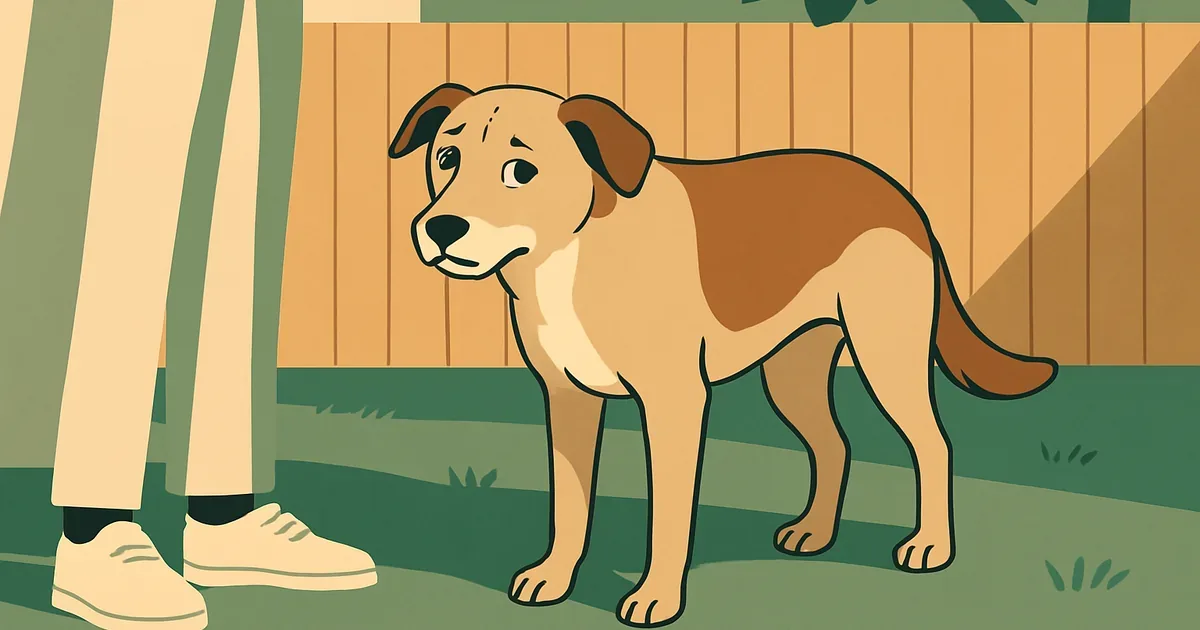
Table of Contents
Enzyme cleaners can neutralize skunk spray by breaking down the thiol compounds that cause the smell. These are sulfur-based molecules that bond to skin, fur, and fabric. Regular soap and water only push the smell around. Enzyme cleaners target the thiols at a molecular level and break them into odorless byproducts.
If your dog just got sprayed, skip ahead to the dog treatment protocol below. If you have time to read, here’s why skunk spray is so persistent and why the old remedies don’t work.
Why skunk spray is so hard to remove
Thiol compounds are well-documented in chemistry literature. The National Center for Biotechnology Information has resources on how enzymes interact with organic compounds like these. Understanding the chemistry helps explain why enzyme-based treatment works better than masking agents.
Skunk spray contains thiols (also called mercaptans), sulfur-based organic compounds that are among the most potent odor molecules in nature. The human nose can detect skunk spray at concentrations as low as 10 parts per billion.
Thiols bond strongly to proteins in skin, hair, fur, and fabric fibers. That’s why the smell seems to stick to everything it touches. Water alone doesn’t break these bonds, which is why regular bathing barely helps.
Here’s the part that surprises most people: the smell actually gets worse when wet. Moisture releases more thiol molecules into the air. So giving your dog a plain water bath before treating the spray can temporarily make the odor more intense, not less.
A skunk can spray accurately up to 10-15 feet and carries enough liquid for 5-6 sprays before needing to regenerate. If your dog got a direct hit, you’re dealing with a concentrated dose of thiols bonded to fur, skin, and anything else in the spray zone.
Why tomato juice doesn’t work
The tomato juice myth has persisted for decades. Your neighbor swears by it. Your grandmother recommended it. But it doesn’t actually neutralize thiols.
What really happens is a phenomenon called olfactory fatigue. After smelling skunk spray for several minutes, your nose becomes partially desensitized to it. When you introduce the strong tomato smell, it dominates your perception. You think the skunk odor is gone. It isn’t.
⚠️ Tomato Juice Is a Myth
Tomato juice, perfume, air fresheners, and scented sprays all do the same thing: mask the skunk smell without removing it. The thiols are still bonded to the surface. When your nose recovers from the masking scent or when the surface gets wet again, the skunk odor comes right back. You need a product that breaks the thiol bonds, not one that covers them up.
The same problem applies to any masking agent. Scented sprays, Febreze fabric spray, cologne, vinegar baths: they cover the smell temporarily but leave the thiols intact. You need something that chemically breaks down the odor-causing compounds.
How enzyme cleaners break down skunk spray
Enzyme cleaners contain protease and other enzymes that break apart organic compounds. They attack the thiol molecules and the proteins they’ve bonded to, splitting them into smaller pieces that don’t produce odor.
This is actual neutralization, not masking. The odor-causing compounds are broken down into odorless byproducts that rinse away with water. Enzyme cleaners also handle the secondary odors from bacteria that feed on the spray residue.
For the full science behind how enzymes break down organic compounds, see our explanation of how enzyme cleaners work.
Dog treatment protocol
This is the section most people need right now. Your dog got sprayed and you need to act fast. Here’s the step-by-step process.
Immediate steps (first 15 minutes)
- Keep the dog outside if possible. Don’t bring the smell into your home. If it’s cold or raining, use a garage or covered porch.
- Check eyes and mouth first. If the dog was sprayed in the face, flush eyes with plain water or saline immediately. Look for redness, swelling, or excessive pawing at the face. Contact your vet if you see irritation.
- Blot any visible liquid spray off the fur with paper towels. Don’t rub. Rubbing spreads the thiols deeper into the coat.
- Do not wet the dog before applying cleaner. Water spreads the thiols across a wider area of fur and can make the smell worse initially.
ℹ️ Check With Your Vet
If your dog was sprayed directly in the face and shows signs of eye irritation, excessive drooling, nausea, or vomiting, contact your vet. Skunk spray can cause temporary blindness and nausea in dogs. Most dogs recover fully, but a vet can prescribe eye drops or anti-nausea medication if needed.
Enzyme cleaner bath
- Apply enzyme cleaner directly to dry fur. Work it in with your hands (wear rubber or nitrile gloves). Start with the sprayed areas and work outward.
- Focus on the areas that got hit directly. The face, chest, and front legs are the most common spray zones.
- Let the enzyme cleaner sit for 10-15 minutes. This gives the enzymes time to break down the thiols. Don’t rush this step.
- Rinse with lukewarm water. Work from the head backward so contaminated rinse water flows away from the face.
- Follow up with a regular dog shampoo. This removes the broken-down residue and any remaining enzyme cleaner.
- Repeat if needed. Smell the fur after drying. If the odor is still strong, do another enzyme treatment. Most dogs need 2-3 treatments for a direct spray.
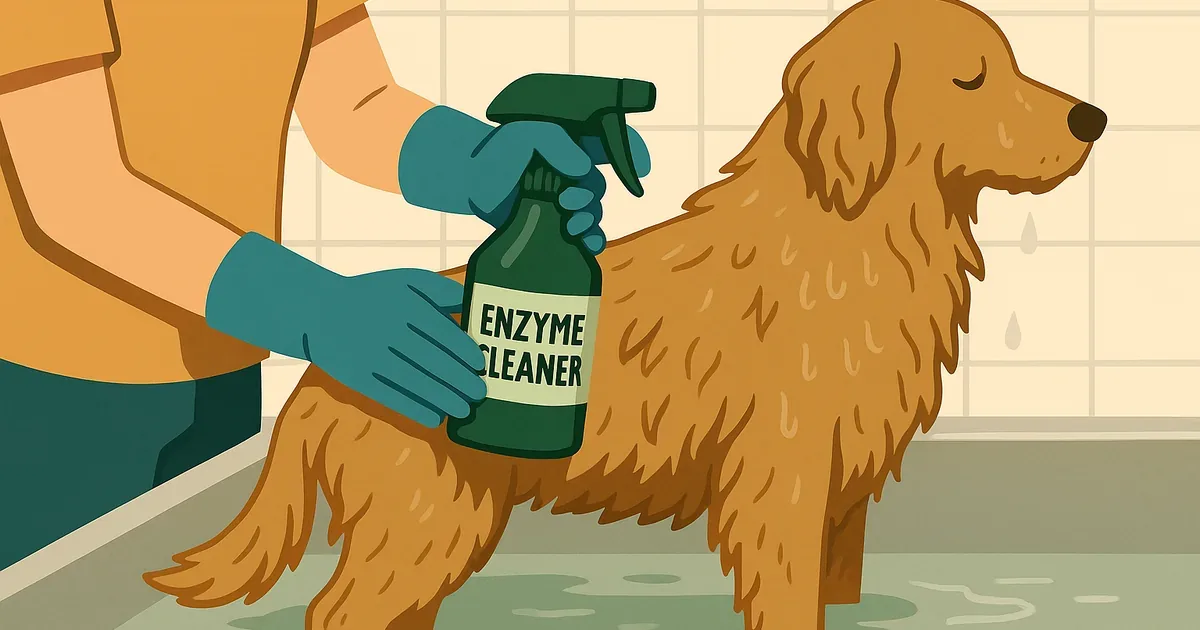
For more enzyme cleaner options for dogs, check our roundup of enzyme cleaners for dogs. Many of the same products that handle urine also work well on skunk spray.
ℹ️ Pet Safety Note
If you’re worried about using cleaning products around your pets, the ASPCA Animal Poison Control Center is a good resource. Most enzyme cleaners designed for pets are considered non-toxic, but always read the label and keep the product away from your dog’s eyes and mouth during treatment.
Treating your home after a skunk encounter
The dog is just part of the problem. If your dog came inside before you caught the smell, or if the skunk sprayed near your house, you’ll need to decontaminate surfaces too.
Clothes and fabrics
Don’t throw skunked clothes in the washing machine with other laundry. The smell will transfer to everything in the load.
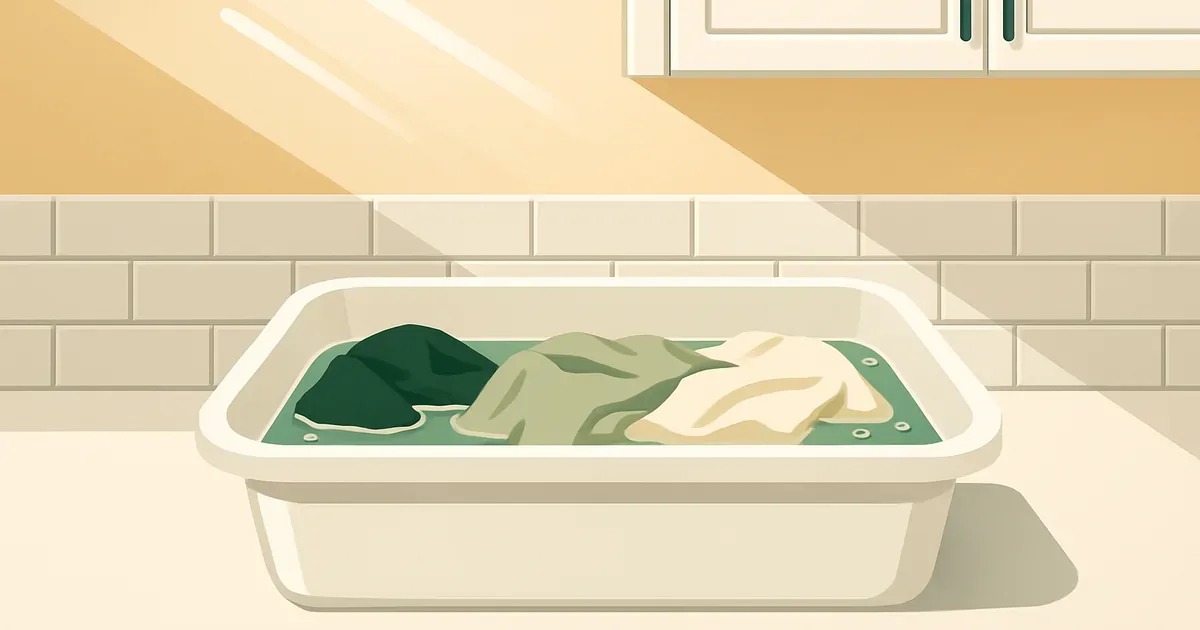
- Pre-soak affected clothes in enzyme cleaner solution for 1-2 hours
- Wash separately with enzyme laundry detergent
- Air dry and smell-check before putting in the dryer (heat can lock in remaining odor)
- If the smell persists, soak and wash again before using the dryer
Carpets, furniture, and hard surfaces
- Spray enzyme cleaner on affected carpet and upholstery (see our picks for the best enzyme carpet cleaners)
- For carpet, saturate the area and cover with plastic wrap for several hours
- Hard surfaces (decks, siding, porches) can be sprayed and scrubbed
- Open windows and run fans to ventilate while treating
- The smell in the air dissipates on its own once the source surfaces are treated
If the skunk sprayed near your car and your dog got in the vehicle, see our guide on enzyme cleaner for car interiors for a detailed treatment process.
Enzyme cleaner vs. the peroxide/baking soda mix
The classic DIY recipe (hydrogen peroxide + baking soda + dish soap) does work. It oxidizes thiols through a different chemical process than enzymes use. But it comes with tradeoffs.
| Factor | Enzyme Cleaner | Peroxide/Baking Soda Mix |
|---|---|---|
| Thiol removal | Breaks down thiols enzymatically | Oxidizes thiols chemically |
| Safe for dark fur | Yes | Can bleach dark fur |
| Safe for colored fabrics | Yes | Can bleach colored fabrics |
| Shelf life | 1-2 years bottled | Must be mixed fresh each time |
| Repeat use safety | Safe for multiple applications | Peroxide can irritate skin with repeated use |
| Speed | 10-15 minutes per application | 5-10 minutes per application |
💡 Combining Both Methods
For severe cases (a direct facial spray), you can use the peroxide/baking soda mix first for quick initial relief, then follow up with enzyme cleaner for thorough treatment. Use the peroxide mix on the body (avoiding the face), rinse, then apply enzyme cleaner. This two-stage approach handles the worst cases faster than either method alone.
The bottom line: enzyme cleaners are safer for repeated use on pets, colored fabrics, and household surfaces. The peroxide mix works faster but carries a bleaching risk. For most situations, enzyme cleaner is the better choice because you won’t accidentally lighten your dog’s fur or ruin your clothes.
For broader pet odor issues beyond skunk spray, see our picks for the best enzyme cleaners for pet odors. If you’re comparing enzyme cleaners to other household solutions, our enzyme cleaner vs vinegar comparison breaks down the differences.
If you want to check whether your current cleaning products actually contain enzymes, our guide on identifying enzyme cleaners covers what to look for on labels. And for a deeper look at indoor air quality and odor management, the EPA offers helpful guidance on ventilation during cleanup.
Wrapping up
Skunk spray is one of the toughest odor problems you’ll face as a pet owner. Tomato juice and air fresheners won’t fix it because they mask the smell without breaking down the thiol compounds that cause it. Enzyme cleaners actually neutralize those compounds.
Act fast, apply to dry fur first, and plan on 2-3 treatments for a direct spray. Treat your clothes and home surfaces separately. And if the smell got into your car, treat that too before the thiols bond permanently to the upholstery.
The good news: unlike many cleaning challenges, skunk spray responds well to the right treatment. With enzyme cleaner and a little patience, you can get the smell out of your dog, your home, and your clothes within a few days.
Frequently Asked Questions
How quickly should I apply enzyme cleaner after a skunk spray?
Is enzyme cleaner safe to use on my dog after skunk spray?
Will enzyme cleaner get skunk smell out of my car?
How many enzyme cleaner treatments does it take to remove skunk smell?
Does skunk smell eventually go away on its own?
Related Articles
Cleaning Product Researcher
Sarah Chen is a pen name for our lead product researcher. A lifelong dog person who now shares her home with two cats, she's no stranger to enzyme cleaners. She writes the guides and reviews on this site based on product research, ingredient analysis, and real user feedback.