Best Enzyme Cleaners for Cat Poop (What Works)
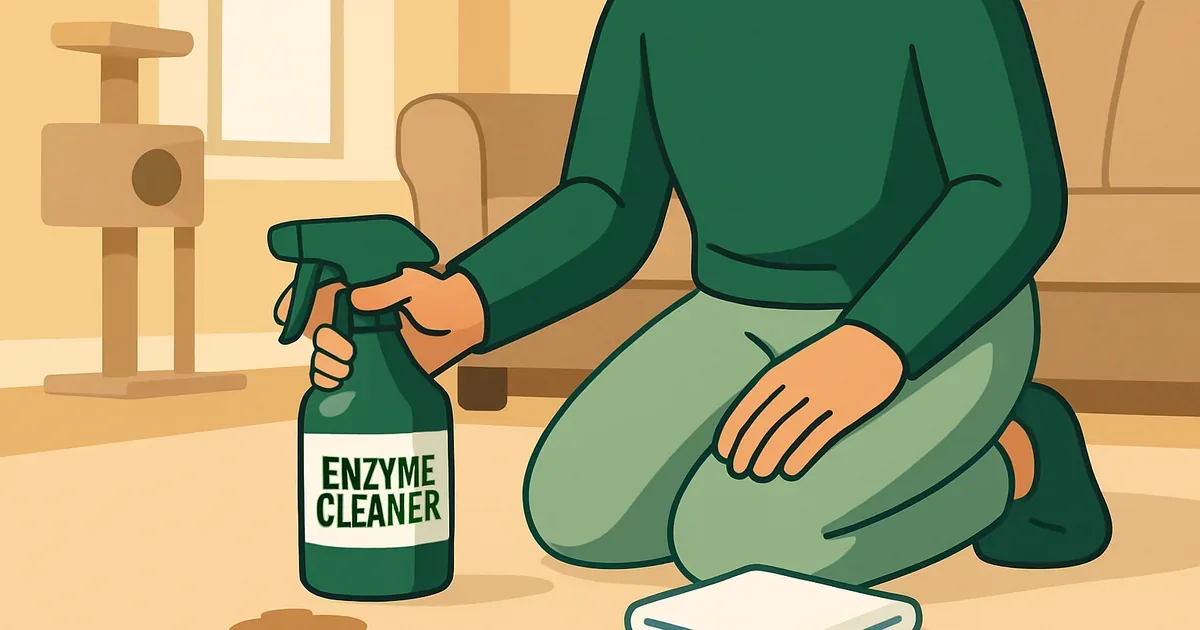
Table of Contents
Affiliate Disclosure: This page contains affiliate links. When you purchase through our links, we may earn a commission at no additional cost to you. Full disclosure.
For cat poop stains, you need an enzyme cleaner with proteases and amylases, not just the uricase found in urine-specific formulas. The cleanup protocol matters too: remove all solid waste first, then apply the enzyme cleaner generously and let it sit 30-60 minutes. Products like Rocco & Roxie enzyme cleaner and Nature’s Miracle Advanced stain remover both handle fecal stains well because they contain broad-spectrum enzymes.
This guide covers the correct cleanup steps, which enzymes target poop, the specific method for diarrhea, and our product picks. If you’re also dealing with urine issues, we have a separate step-by-step urine stain removal guide.
Why poop needs different enzymes than urine
Cat feces contain proteins, fats, and starches from digested food. That’s a very different chemical makeup from urine, which is mostly water, urea, and uric acid crystals.
Urine-specific enzyme cleaners focus on uricase, the enzyme that breaks down uric acid. Poop stains need a different toolkit:
- Proteases break down the protein content in fecal matter
- Amylases break down starches from digested food
- Lipases break down fats (especially relevant for rich diets)
Most broad-spectrum enzyme cleaners include all three enzyme types. Urine-only formulas may not. Check the product label before you buy. If you need a cleaner that handles both problems, look for “multi-enzyme” or “broad spectrum” on the packaging.
For a deeper look at how these enzymes work, see our guide on how enzyme cleaners work. The NCBI enzyme reference covers the science of how enzymes function as biological catalysts.
The correct cleanup protocol
The order of operations matters here. Skipping a step or doing them out of sequence makes the whole process harder.
Step 1: Remove all solids first
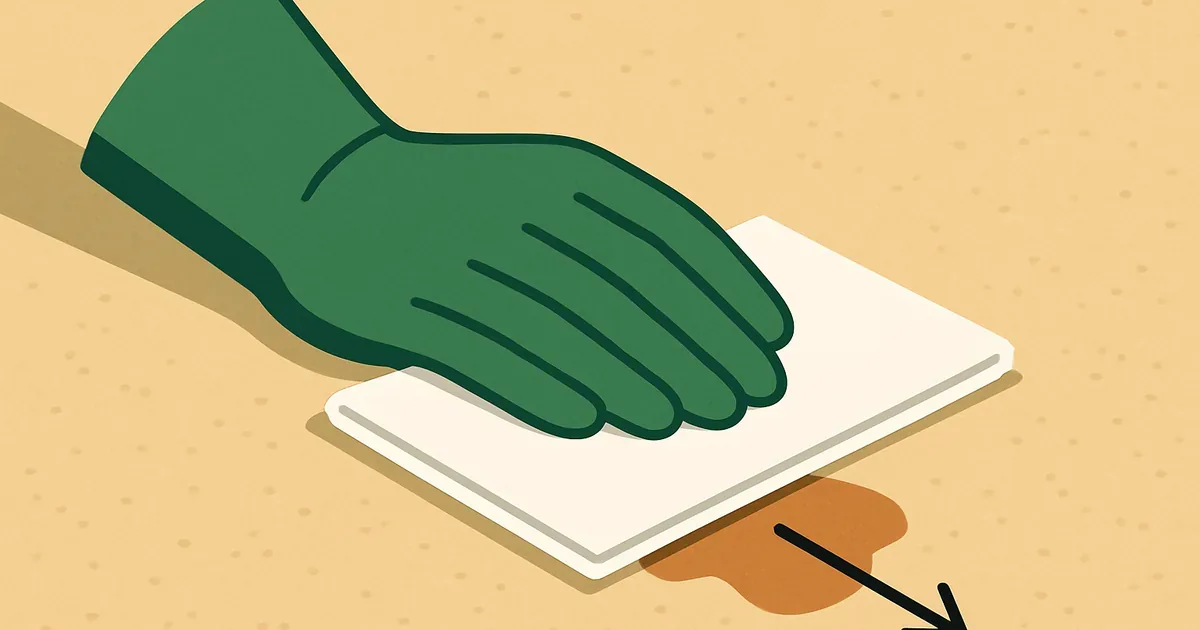
Pick up solid waste with paper towels or a plastic bag turned inside out. For carpet, use a spoon or dull knife to scrape the material toward the center of the mess. Work from the outside edges inward.
Two things to avoid:
- Don’t press down. Pushing material deeper into carpet fibers makes the stain worse.
- Don’t rub or wipe. This spreads the stain outward and grinds it into the surface.
Step 2: Cold water rinse
Blot the area with a cloth dampened in cold water. This dilutes the remaining residue and preps the surface for the enzyme cleaner.
Never use hot water on poop stains. Hot water sets protein-based stains, making them much harder to remove. Cold water keeps the proteins loose and easier for enzymes to break down.
Cat Poop Stain Cleanup Protocol
Remove solids
Lift solid waste with a plastic bag or paper towel. Don't press down or rub.
Cold water rinse
Blot with a cloth dampened in cold water. Never use hot water (sets protein stains).
Apply enzyme cleaner
Saturate the area. Cover with a damp cloth or plastic wrap. Wait 30-60 minutes for fresh stains.
Blot and air dry
Press clean towels into the area. Let air dry fully before checking results.
Step 3: Apply enzyme cleaner
Saturate the stained area with your enzyme cleaner. Don’t just mist the surface. You need enough product to soak through to wherever the stain went.
For fresh stains, let it sit 30-60 minutes. Cover the treated area with a damp cloth or plastic wrap to keep the enzymes active. Enzymes stop working once the surface dries out.
Step 4: Blot and air dry
Press clean towels into the treated area to absorb the enzyme cleaner and dissolved residue. Then let the spot air dry completely. Don’t check the result until the area is fully dry since a damp carpet always looks darker and smells stronger than a dry one.
If the stain or smell remains after the area dries, apply a second round of enzyme cleaner.
⚠️ Hot Water Sets Poop Stains
Never use hot water on fecal stains. Heat causes the proteins in poop to bond with fibers, creating a stain that’s much harder to remove. Always use cold water for rinsing and diluting. Your enzyme cleaner should be applied at room temperature.
The diarrhea cleanup method
Diarrhea is a different challenge. The liquid consistency means the stain soaks deeper into carpet, padding, and fabric than solid stool does.
Here’s the approach:
- Scoop what you can without pressing down. A dustpan or stiff piece of cardboard works for the bulk of the material.
- Blot from the outside edges inward. Working outward pushes the liquid further into clean areas. Use cold water and clean cloths.
- Apply enzyme cleaner generously. Use significantly more product than you would for a solid stool stain. Liquid stains penetrate deeper, so your cleaner needs to follow.
- Cover and let sit 4-8 hours. Diarrhea stains need longer treatment time because the contamination goes deeper into the fibers and padding.
- Expect to need 2 applications. One round rarely handles a diarrhea stain completely, especially on carpet.
For carpet, you may need to pull back the carpet and treat the pad directly. If the stain soaked through to the pad, surface treatment alone won’t eliminate the odor.
ℹ️ When Diarrhea Signals a Vet Visit
If your cat has repeated diarrhea accidents, the cleanup is secondary to the health concern. Persistent diarrhea in cats can signal parasites, food allergies, or inflammatory bowel disease. Schedule a vet visit if it happens more than twice in a week. The ASPCA has additional guidance on litter box and elimination issues.
Best products for fecal stains
You need an enzyme cleaner with broad-spectrum enzymes, not a urine-only formula. Here are three products that handle cat poop stains well based on our research. Prices listed are at the time of writing and may change.
| Product | Key Enzymes | Size | Price | Best For |
|---|---|---|---|---|
| Rocco & Roxie enzyme cleaner | Protease, lipase, amylase | 32 oz | ~$20 | All-around fecal stains |
| Nature’s Miracle Advanced stain remover | Protease, amylase, lipase | 32 oz | ~$12 | Budget-friendly option |
| Anti Icky Poo enzyme cleaner | Broad spectrum + bacteria | 32 oz | ~$25 | Severe or old stains |
All three products also handle urine, so you don’t need separate cleaners if your cat has both types of accidents. For a broader comparison of pet cleaners, see our best pet stain and odor removers roundup.
If you’re dealing with cat urine too, check our picks for the best enzyme cleaners for cat urine. Many cat owners deal with both problems, and a multi-enzyme product saves you from buying two separate cleaners.
Surfaces and special cases
Carpet and rugs
Carpet is the biggest challenge because stains soak through the fibers into the pad underneath. You need enough enzyme cleaner to penetrate through the carpet to the pad layer.
For thick carpet, press the enzyme cleaner in with your hand or a clean cloth. You should feel moisture at the base of the fibers. Treat an area larger than the visible stain since the contamination always spreads wider underneath than it looks on the surface. For more carpet-specific tips, see our picks for the best enzyme carpet cleaners.
Hardwood and tile
Hard surfaces are easier to clean, but grout lines on tile can absorb fecal matter and hold odors. Apply enzyme cleaner directly to the grout and let it sit for 30-60 minutes.
For sealed hardwood, wipe up the waste, apply enzyme cleaner, and let it sit for 15-30 minutes. Then wipe completely dry. For unsealed hardwood, apply sparingly and wipe dry within 10 minutes. Deep stains in unsealed wood may need professional treatment. The NWFA offers wood floor care guidelines if you’re unsure about your floor’s finish type.
Upholstery and bedding
Check the fabric care label first. For machine-washable items like bedding and removable cushion covers, pre-treat the stain with enzyme cleaner for 30 minutes, then wash on a cold cycle.
For upholstery you can’t remove, spray the enzyme cleaner onto the stained area and press it in with a clean cloth. Cover with plastic wrap and let it sit for several hours. Air dry completely before using the furniture again.
For more pet odor solutions across surfaces, see our guide on enzyme cleaners for pet odors. And if your cat is also having urine accidents, you may want to read about enzyme cleaners for dog urine since many of the same products work for both cats and dogs.
💡 Keep Supplies Ready
Cat poop accidents are easier to handle when you act fast. Keep a bottle of broad-spectrum enzyme cleaner, paper towels, a plastic bag, and a damp cloth in your cleaning supplies. The faster you remove the solids and apply the enzyme cleaner, the less likely you are to need repeat treatments.
Wrapping up
Cat poop cleanup comes down to three things: remove the solids first, use a broad-spectrum enzyme cleaner (not a urine-only formula), and give it enough contact time. Cold water only. Diarrhea stains need extra product and longer soak time because they penetrate deeper.
If your cat is having repeated accidents outside the litter box, address the behavioral or health issue alongside the cleanup. A clean spot that still smells to your cat is an invitation to go there again. Enzyme cleaners break down that scent signal, which helps with retraining.
Frequently Asked Questions
Can you use the same enzyme cleaner for cat poop and cat urine?
How do you get cat poop smell out of carpet?
Does cat poop stain permanently?
Is enzyme cleaner safe to use around cats?
How do you clean cat diarrhea from carpet?
Cleaning Product Researcher
Sarah Chen is a pen name for our lead product researcher. A lifelong dog person who now shares her home with two cats, she's no stranger to enzyme cleaners. She writes the guides and reviews on this site based on product research, ingredient analysis, and real user feedback.