Enzyme Cleaner for Washing Machine Odor (How-To)
Table of Contents
Run an empty hot cycle with 1/2 cup of enzyme cleaner to break down the organic sludge causing the smell. For front-load washers, you’ll also need to clean the rubber door gasket by hand. Monthly enzyme treatments prevent the odor from coming back.
This guide covers why your washer smells, a step-by-step cleaning method, gasket cleaning instructions, and a monthly maintenance schedule. If you’re not familiar with how these products work, start with our guide on how enzyme cleaners work.
Affiliate Disclosure: This page contains affiliate links. When you purchase through our links, we may earn a commission at no additional cost to you. Full disclosure.
Why your washing machine smells
That musty smell isn’t your clothes. It’s organic buildup inside the machine itself.
Every load of laundry leaves behind small amounts of detergent residue, fabric softener, body oils, skin cells, and lint. Over weeks and months, this organic layer coats the inside of the drum, the door gasket, and the detergent dispenser.
Front-load washers are worse for two reasons. First, the rubber door gasket creates deep folds that trap moisture and residue. Second, front-loaders use less water per cycle, which means less rinsing of that residue.
The warm, dark, moist environment inside a closed washer is ideal for mold and mildew growth. That’s where the smell comes from. This is similar to how organic buildup causes problems in household drains.
ℹ️ Why Enzymes Work Better Here
Standard cleaners like bleach and vinegar treat the symptoms but not the root cause. Bleach is an oxidizer, and household bleach products registered with the EPA carry antimicrobial claims, but it doesn’t remove the organic layer the mold feeds on. The mold grows back. Vinegar is acidic and cuts mineral deposits, but it is not an EPA-registered disinfectant and it doesn’t break down organic buildup either. Enzyme cleaners digest the residue itself so mold has nothing to grow on.
What you’ll need
- Liquid enzyme cleaner (not a spray; you need it in the drum)
- Microfiber cloths or old towels
- Old toothbrush or detail brush (for gasket folds)
- Spray bottle (for gasket treatment)
- Optional: baking soda for extra deodorizing
For product options, check our roundup of best enzyme cleaners for laundry.
Step-by-step: clean your washing machine with enzyme cleaner
-
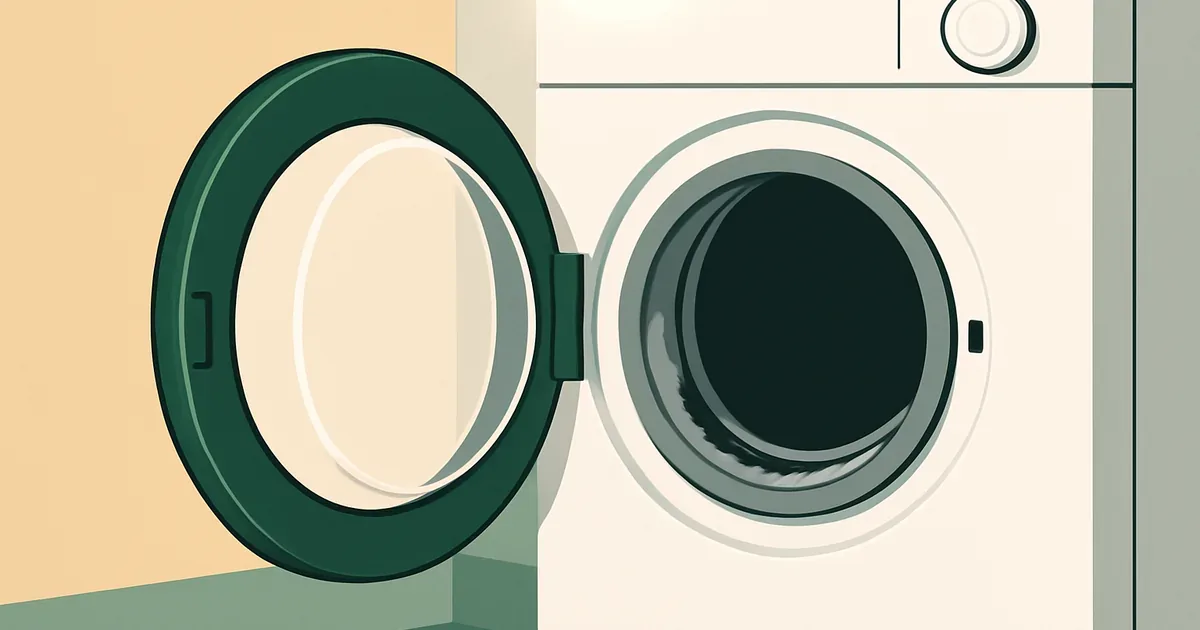
Empty the machine. Remove all clothes, lint, and any debris from the drum. Check the gasket folds for small items like socks or hair ties that get trapped.
-
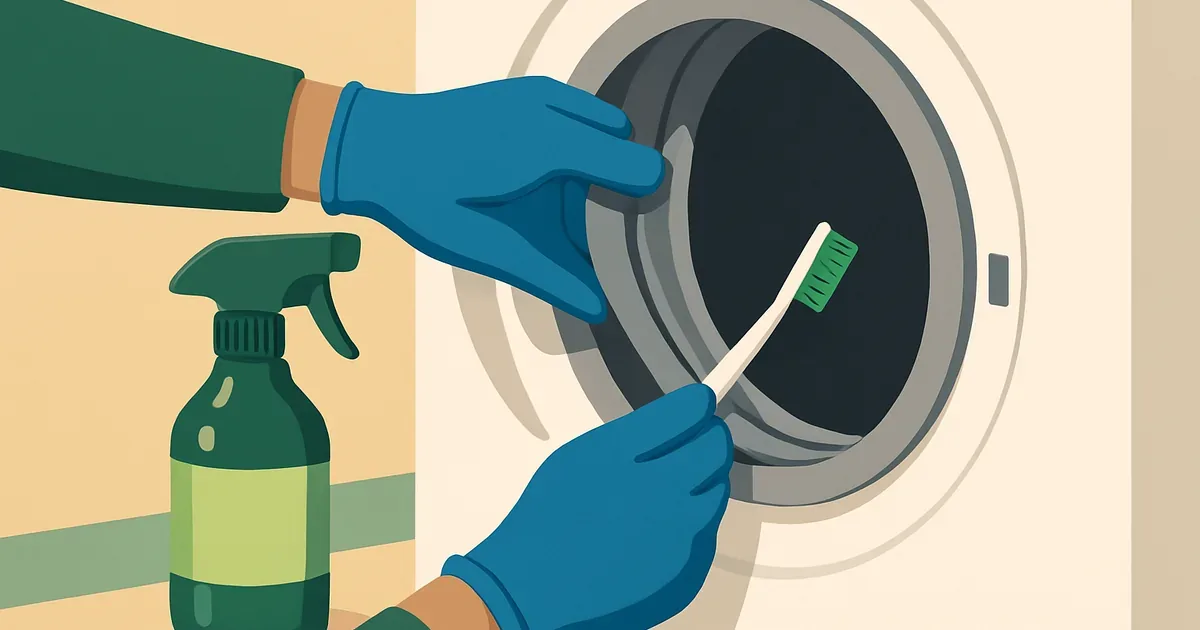
Clean the gasket (front-loaders). Pull back the rubber door seal to expose the inner folds. Spray enzyme cleaner directly into the folds. Scrub with an old toothbrush to loosen the buildup. Wipe clean with a cloth. This is where most of the smell hides, and it’s the step most cleaning guides skip.
-
Add enzyme cleaner to the drum. Pour 1/2 cup of liquid enzyme cleaner directly into the drum. Don’t put it in the detergent dispenser. You want it making direct contact with the drum surface.
-
Run a hot cycle. Select the hottest water setting and the longest cycle your machine offers. The heat boosts enzyme activity, and the long cycle gives the enzymes time to work through the buildup.
-
Run a second rinse. After the hot cycle finishes, run a quick rinse cycle to flush out the loosened residue. This removes dissolved organic matter so it doesn’t resettle on the drum.
-
Wipe down and air dry. Wipe the drum, gasket, and dispenser tray with a dry cloth. Leave the door open to let the machine air dry completely.
💡 For Severely Smelly Machines
If your washer has a strong odor, repeat this process twice. The first treatment loosens and breaks down the top layer of buildup. The second treatment reaches the residue underneath. Wait a day between treatments.
How to clean the detergent dispenser
The dispenser tray is a hidden mold source that most people overlook.
- Pull out the tray. Most models have a release tab that lets you remove it completely.
- Soak in warm water with a splash of enzyme cleaner for 30 minutes.
- Scrub with a brush to remove gummy residue and any mold.
- Rinse, dry, and replace. Make sure it’s fully dry before sliding it back in.
Check your washer’s manual for specific instructions on removing the dispenser. Some models have a slightly different release mechanism. You can use the same enzyme products recommended in our guide to cleaning gym clothes with enzymes.
Monthly maintenance schedule
Keeping your washer fresh takes just a few minutes per week and one hands-off cycle per month.
| Task | Frequency | Time |
|---|---|---|
| Wipe gasket folds with a dry cloth | Weekly | 2 minutes |
| Leave door open after each load | Every use | 0 minutes |
| Enzyme cleaner hot cycle (empty load) | Monthly | ~1 hour (hands-off) |
| Clean dispenser tray | Monthly | 10 minutes |
| Full deep clean (all steps above) | Every 3 months | 30 minutes |
The single best habit you can build: leave the washer door open after every load. This lets the inside dry out and prevents moisture from feeding mold between uses. For more on choosing products with safer ingredients, the EPA Safer Choice program certifies cleaners that meet strict environmental and health standards. You can also explore the EWG’s Guide to Healthy Cleaning for product safety ratings.
⚠️ Never Mix Enzyme Cleaner with Bleach
Don’t add bleach and enzyme cleaner in the same cycle. Bleach destroys the enzymes before they can work. If you want to use both, run the enzyme cycle first to remove the organic buildup. Then run a separate bleach cycle on a different day to kill any remaining mold spores. Keep at least 24 hours between treatments.
Enzyme cleaner vs. other methods
You might be wondering how enzyme cleaners stack up against the other common washer-cleaning methods. Here’s a quick comparison:
| Method | What It Does | What It Doesn’t Do |
|---|---|---|
| Enzyme cleaner | Breaks down organic buildup (the food source for mold) | Doesn’t kill mold spores directly |
| White vinegar | Acidic, loosens some mineral deposits | Not EPA-registered as a disinfectant. Doesn’t break down organic residue |
| Bleach | Oxidizer. EPA-registered bleach products carry antimicrobial claims for hard, nonporous surfaces | Doesn’t remove the organic layer mold grows on |
| Commercial washer tabs (like Affresh) | Surfactants loosen surface grime | Most don’t contain enzymes or address root cause |
The best approach combines methods. Run a monthly enzyme treatment to remove the organic layer. Add an occasional bleach cycle (every 2-3 months) if you want an antimicrobial step. Run them on separate days, never together.
⚠️ Never Mix Bleach With Vinegar or Ammonia
Bleach combined with an acid like vinegar releases chlorine gas, and bleach combined with ammonia releases chloramine. Both are dangerous in an enclosed space like a laundry room. If you use more than one of these methods, run each on a separate day and run an empty rinse cycle in between. Never pour them into the machine together, and never combine them in the detergent drawer.
For visible mold on hard surfaces, note that the EPA recommends scrubbing with detergent and water and drying completely, rather than reaching for a biocide first. If mold has penetrated deep into the rubber gasket, that is a replacement job rather than a cleaning one. If you’re comparing enzyme products head-to-head, our enzyme cleaner vs vinegar comparison breaks down the differences.
For related household cleaning with enzymes, check our guide on enzyme drain cleaners. The same principle applies: enzymes break down organic buildup that other cleaners leave behind.
Monthly Washing Machine Enzyme Maintenance
Wrapping up
How Enzymes Work in Context. Enzymes are biological catalysts that speed up chemical reactions. In a washing machine, protease and lipase enzymes break down proteins and fats from body oils, skin cells, and detergent residue. For more on enzyme biochemistry, see this overview of enzyme function from NCBI.
Washing machine odor comes from organic residue that builds up over time. Bleach and vinegar treat the surface but don’t remove the source. Enzyme cleaners digest the buildup itself, which stops mold from regrowing.
The monthly maintenance routine takes about 10 minutes of hands-on time plus a machine cycle. The rest is hands-off. Build the habit of leaving your washer door open after each load, and the smell problem stays solved.
If your washer is connected to a septic system, enzyme cleaners are a good fit there too. See our guide on enzyme cleaners for septic systems for more on that use case. For general washer maintenance beyond enzymes, you might also want to look at making your own enzyme cleaner for a budget-friendly option.
Frequently Asked Questions
Can I use any enzyme cleaner in my washing machine?
How often should I clean my washing machine with enzyme cleaner?
Will enzyme cleaner damage my washing machine?
Why does my front-load washer smell worse than my old top-loader?
Can enzyme cleaner remove black mold from my washer gasket?
Sources
The references used on this page. We link primary sources so you can check our work.
- Mold Cleanup in Your Home. US Environmental Protection Agency (epa.gov)
Cleaning Product Researcher
Sarah Chen is a pen name for our lead product researcher. A lifelong dog person who now shares her home with two cats, she's no stranger to enzyme cleaners. She writes the guides and reviews on this site based on product research, ingredient analysis, and real user feedback.