Enzyme Cleaner for Oil and Grease Stains (Lipase)
Table of Contents
Most enzyme cleaners are built for protein stains like urine and blood. Oil and grease stains need a different enzyme: lipase. Lipase breaks down fats and oils the way protease breaks down proteins. If you’ve been using a pet stain enzyme cleaner on grease and it didn’t work, that’s the reason.
Here’s which enzyme (lipase) targets oil and grease, the best products for oil stains, and step-by-step cleaning for driveways, kitchen grease, and clothing.
Affiliate Disclosure: This page contains affiliate links. When you purchase through our links, we may earn a commission at no additional cost to you. Full disclosure.
Why Most Enzyme Cleaners Don’t Work on Oil
This is the most common misunderstanding about enzyme cleaners. People grab a bottle of pet stain remover, spray it on a grease stain, and wonder why nothing happens. The answer is simple: wrong enzyme.
Most pet-focused enzyme cleaners contain protease (targets proteins) and sometimes amylase (targets starches). Oil and grease are lipids. They need lipase.
Here’s the breakdown:
| Enzyme Type | What It Breaks Down | Common Stains |
|---|---|---|
| Protease | Proteins | Urine, blood, food proteins, vomit |
| Amylase | Starches | Food stains, sauces, pasta |
| Lipase | Fats and oils | Cooking grease, motor oil, butter, salad dressing |
| Cellulase | Plant fibers | Grass stains, soil, plant matter |
ℹ️ Check the Label
Check the label. If it lists lipase as an active enzyme, it can handle oil stains. If it only lists protease, it’s designed for protein stains and won’t do much on grease.
For a deeper explanation of enzyme types, read about protease, lipase, and amylase explained. For general enzyme science, see how enzyme cleaners work.
Enzyme Types for Oil and Grease
| Enzyme | Breaks Down | Use For |
|---|---|---|
| Protease | Proteins | Blood, urine, sweat |
| Amylase | Starches | Food stains, sauces |
| Lipase | Fats and oils | Cooking grease, motor oil, butter |
| Cellulase | Plant fibers | Grass stains, soil |
Best Enzyme Cleaners with Lipase
Not many consumer enzyme cleaners include lipase. Here are the ones that do.
| Product | Price | Contains Lipase? | Best For |
|---|---|---|---|
| Biokleen Bac-Out | ~$13.49 | Yes | Kitchen grease, food spills |
| Green Gobbler | ~$19.99 | Yes | Heavy grease, drains |
| ECOS Pet | ~$8.99 | Yes | Clothing, light kitchen grease |
Prices reflect listings at time of writing and may change.
Biokleen Bac-Out (Best All-Purpose with Lipase)
Biokleen Bac-Out enzyme cleaner (~$13.49) contains lipase along with protease and amylase, making it one of the most versatile enzyme cleaners available. It handles kitchen grease, food spills, and light oil stains well. The plant-based formula is non-toxic and safe for food-preparation surfaces.
Green Gobbler (Best for Heavy Grease)
Green Gobbler enzyme cleaner (~$19.99) has an enzyme formula designed for grease and organic buildup. It works well both as a surface cleaner and as a drain treatment for grease-clogged kitchen drains. It’s the strongest option for heavy grease situations.
ECOS Pet (Budget Enzyme with Lipase)
ECOS Pet enzyme cleaner (~$8.99) uses plant-derived enzymes including lipase. The mild formula makes it a good choice for treating grease stains on clothing and for light kitchen cleanup. It’s the most affordable lipase-containing option.
Cleaning Oil Stains on Driveways and Concrete
Motor oil, transmission fluid, and automotive grease are common driveway problems. Enzyme cleaners can handle them, but the process takes more time than indoor cleaning because concrete is porous and absorbs oil deep.
Follow these steps:
- Absorb excess oil. Sprinkle cat litter or baking soda on the stain. Let it sit for 30 minutes. Sweep it up. This pulls out the surface oil so the enzymes can work on what’s absorbed into the concrete.
- Apply enzyme cleaner. Pour a lipase-based enzyme cleaner directly on the stain. Use enough to soak into the concrete pores.
- Scrub with a stiff brush. Work the cleaner into the concrete surface with a stiff-bristled brush. This pushes the enzymes into the pores where the oil is trapped.
- Cover with plastic sheeting. Tape down a sheet of plastic over the treated area. Enzymes need moisture and time to work, and outdoor conditions dry them out quickly.
- Wait 24-48 hours. Concrete absorbs oil deep, so enzymes need much longer contact time than carpet or fabric.
- Rinse and repeat if needed. Pressure wash or scrub with warm water. Old stains may need a second application.
💡 Fresh Oil Is Easier
Fresh oil stains are much easier to treat than old ones. If you see a drip on the driveway, clean it within a day or two for the best results. Oil that has soaked into concrete for months becomes very difficult to remove completely.
Driveway Oil Stain Removal with Enzyme Cleaner
Absorb excess oil
Cover fresh oil with cat litter, sawdust, or cornstarch. Let sit 30 minutes, sweep up.
Apply enzyme cleaner
Pour a lipase-based enzyme cleaner directly on the stain. Soak into concrete pores.
Scrub with stiff brush
Work the cleaner into the concrete surface to push enzymes into pores.
Cover with plastic
Tape down plastic sheeting. Enzymes need moisture and time outdoors.
Wait 24-48 hours
Concrete absorbs oil deep, so enzymes need much longer contact time.
Rinse and repeat
Pressure wash or scrub with warm water. Old stains may need a second application.
Cleaning Kitchen Grease with Enzymes
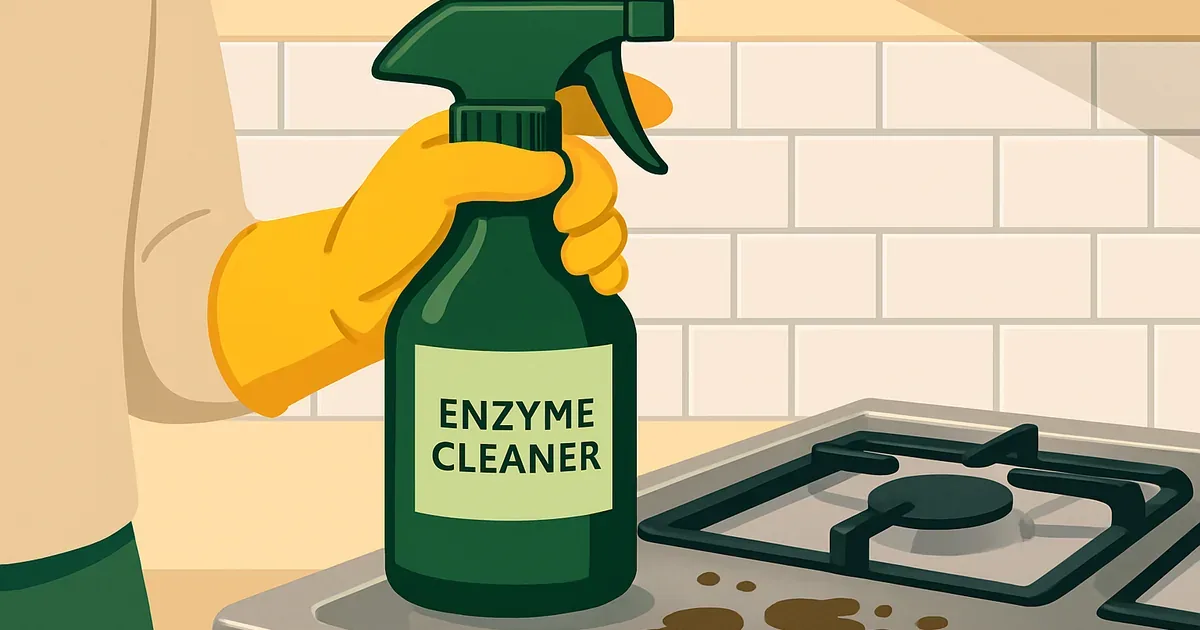
Stovetop splatters, range hood filters, and countertop grease respond well to lipase-based enzyme cleaners. The advantage over chemical degreasers: enzyme cleaners are non-toxic and safe for food-preparation surfaces.
- Wipe excess grease. Use paper towels to remove any surface grease before applying the cleaner.
- Spray enzyme cleaner. Apply a lipase-based cleaner to the greasy surface. Cover the area completely.
- Let sit 15-30 minutes. Kitchen grease is usually fresh and needs less dwell time than driveway oil.
- Wipe with a damp cloth. The enzymes will have loosened the grease for easy removal. Rinse the surface with clean water.
- For range hood filters: Remove the filters and soak them in a basin with enzyme cleaner for 2-4 hours. Scrub with a brush, rinse, and let dry before reinstalling.
For kitchen-specific enzyme cleaning, see our guide on enzyme cleaner for kitchen odors.
For commercial kitchen applications, read about enzyme cleaners for restaurant kitchens.
Removing Grease Stains from Clothing
Cooking oil, butter, salad dressing, and automotive grease on fabric all need the same approach: lipase enzymes and patience.
- Don’t put it in the dryer first. This is the most important rule. Heat from a dryer sets grease stains permanently. If you’ve already dried the garment, enzyme treatment may lighten the stain but full removal is unlikely.
- Apply enzyme cleaner directly. Rub a lipase-based enzyme cleaner into the stain. Work it into the fabric with your fingers.
- Let sit 30-60 minutes. Give the lipase enzymes time to break down the grease molecules.
- Wash in warm water. Cold water won’t dissolve the loosened grease. Warm (not hot) water helps flush the broken-down fats out of the fabric.
- Check before drying. Look at the garment after washing. If the stain is still visible, repeat the enzyme treatment before machine drying. Once heat from the dryer hits a grease stain, it’s set.
⚠️ Heat Sets Grease Stains
If you’ve already dried a grease-stained garment in the dryer, the heat has likely set the stain permanently. Enzyme treatment may lighten it, but full removal is unlikely. Always check for grease stains before putting clothes in the dryer.
For more on enzyme cleaners and laundry, see our guide to the best enzyme cleaners for laundry.
Enzyme Cleaner vs Chemical Degreaser
Both options clean grease. The difference is speed, safety, and what types of grease each handles best.
| Feature | Enzyme Cleaner | Chemical Degreaser |
|---|---|---|
| Speed | 15 minutes to 48 hours | Instant to 15 minutes |
| Toxicity | Non-toxic, biodegradable | Harsh chemicals, ventilation needed |
| Food-Safe Surfaces | Yes, rinse after use | Not recommended near food |
| Effectiveness on Cooking Grease | Good | Good |
| Effectiveness on Synthetic Grease | Limited | Good |
| Environmental Impact | Biodegradable | Chemical runoff concerns |
| Best Use | Household and food grease | Heavy industrial applications |
When to use each: Enzyme cleaners are the better choice for household kitchen grease, food-prep surfaces, and clothing stains. Chemical degreasers are better for heavy-duty industrial grease, mechanic shop floors, and situations where speed matters more than safety.
For most home situations, an enzyme cleaner with lipase does the job safely and effectively. Save chemical degreasers for the garage workshop.
💡 Read the Label Twice
Some enzyme cleaners marketed as “all-purpose” don’t contain lipase. Before buying, check the ingredient list specifically for lipase. Protease alone won’t help with grease. You need lipase for fats and oils.
For related surface cleaning, check our guide on enzyme cleaner for tile and grout. You can also learn about enzyme cleaner for hardwood floors and find more options in our list of best pet stain and odor removers.
Lipase and Food Safety
Enzyme cleaners with lipase are a good fit for food-prep areas because they’re biodegradable and non-toxic. The EPA Safer Choice program certifies cleaning products that meet strict safety standards, and several enzyme cleaners carry this label. The EWG’s Guide to Healthy Cleaning is another resource for checking product safety ratings.
For more on how different enzymes target different stain types, see our article on which products are enzyme cleaners. The NCBI’s guide to enzyme function covers the underlying biology.
Enzyme Cleaners with Lipase for Grease
| Product | Price | Rating | Best For |
|---|---|---|---|
| Biokleen Bac-Out | ~$13.49 | Kitchen grease, food spills | |
| Green Gobbler | ~$19.99 | Heavy grease, drains | |
| ECOS Pet | ~$8.99 | Clothing, light kitchen grease |
Frequently Asked Questions
What enzyme breaks down oil and grease?
Will a pet enzyme cleaner work on grease?
Can enzyme cleaner remove motor oil from a driveway?
Is enzyme cleaner safe to use in the kitchen?
How do you get grease out of clothes that have already been dried?
What's the difference between lipase and protease?
Cleaning Product Researcher
Sarah Chen is a pen name for our lead product researcher. A lifelong dog person who now shares her home with two cats, she's no stranger to enzyme cleaners. She writes the guides and reviews on this site based on product research, ingredient analysis, and real user feedback.